Turkish cuisine offers a rich blend of flavors that have evolved over centuries. From savory kebabs to sweet desserts like baklava, these dishes showcase the country’s diverse cultural influences and regional specialties.
You’ll discover incredible taste combinations that balance meat, vegetables, and aromatic spices in perfectly harmonious ways.
The recipes in this collection will guide you through creating authentic Turkish dishes in your own kitchen. Each food item represents traditions and cooking techniques passed down through generations.
Whether you’re looking for hearty main courses, vibrant side dishes, or sweet treats, Turkish food provides options that are both satisfying and packed with unique flavors.

1. Turkish Kofte
Turkish Kofte, also known as köfte, represents popular Meatballs in Turkish cuisine. The dish consists of ground meat (typically beef or lamb) mixed with spices and herbs, then shaped into fingers, balls, or patties before being grilled or baked.
The authentic recipe typically includes finely minced meat mixed with breadcrumbs, onions, and a blend of spices like cumin, paprika, and fresh parsley. Some versions add grated onion rather than pieces to create a smoother texture in the meatballs.
The distinction of Turkish köfte comes from its perfect balance of spices and the cooking method that results in a crispy exterior while maintaining a juicy center.
Regional variations exist throughout Turkey, with some areas adding bulgur wheat to the mix or changing the spice profile. The shape also varies – some köfte are formed into cylinders while others are flattened into patties. They’re typically served with rice, fresh vegetables, yogurt sauce, or wrapped in flatbread.
Making köfte at home allows you to control the quality of ingredients and adjust spices to your preference. The dish makes an excellent weeknight dinner option as the mixture can be prepared ahead and even frozen until ready to cook.

2. Yogurt Salad Dressing
Turkish yogurt salad dressing is a creamy, tangy addition to many dishes. It’s simple to make and adds a refreshing flavor to your meals.
The base of this dressing is thick yogurt mixed with garlic and lemon juice. You can easily prepare it at home with just a few ingredients.
This versatile dressing works well drizzled over meats, fish, or vegetables. It’s especially popular with carrot salads, where the sweetness of sautéed carrots balances the tangy yogurt.
For a traditional Turkish flavor, you can add herbs like mint or dill. This dressing is healthier than store-bought options and brings authentic Mediterranean taste to your table.

3. Borek
Borek is a flaky Turkish pastry filled with tasty ingredients. You can find it with cheese, spinach, meat, or potato fillings.
This popular dish features thin, crispy layers of dough wrapped around savory mixtures. The spinach and feta combination is especially common and delicious.
Turkish families often serve borek for breakfast or as a snack with tea. You can shape it into spirals (kol börek), rolls, or flat layered pastries.
Making borek at home is possible with phyllo dough and your choice of fillings. The result is a crispy outside with a warm, flavorful inside that showcases why this dish is beloved throughout Turkey and neighboring countries.

4. Turkish Coffee
Turkish coffee is a unique brewing method that results in a strong, rich drink. It’s made by combining finely ground coffee, water, and sugar in a special pot called a cezve or ibrik.
To make it at home, you need very finely ground coffee beans. Add water to your cezve, then stir in coffee and sugar if desired. Heat the mixture slowly until it begins to foam.
This traditional drink forms part of the Mediterranean diet‘s healthy approach to eating. Turkish coffee is often served in small cups and enjoyed slowly. It’s known for its intense flavor and thick consistency.

5. Tabbouleh
Tabbouleh is a refreshing Turkish salad known as Kısır in Turkey. Unlike Lebanese versions that focus on parsley, Turkish tabbouleh uses more bulgur wheat.
To make it, you’ll rinse bulgur, then mix it with tomatoes, cucumbers, green onions, and fresh herbs like mint and parsley.
The dressing combines olive oil, lemon juice, and spices like sumac, cumin, and red pepper flakes. These give the salad its distinctive Turkish flavor.
Tabbouleh makes a perfect side dish for grilled meats or can stand alone as a light meal. It’s best served cold and tastes even better after the flavors have time to blend.

6. Bulgur Pilaf
Bulgur pilaf is a hearty and nutritious Turkish dish that’s easy to make. It combines coarse bulgur wheat with sautéed onions, peppers, and garlic for a flavorful side dish.
This one-pot meal comes together in about 30 minutes, making it perfect for busy weeknights. Turkish cooks often add red pepper paste to give the pilaf a deeper flavor and slight heat.
You can enjoy bulgur pilaf as a side dish with many Turkish main courses. It’s a healthier alternative to rice, with a pleasant chewy texture and nutty taste.
In southern Turkey, you might find versions with seasonal vegetables like eggplant and tomatoes for added flavor and nutrition.
7. Turkish Lahmacun
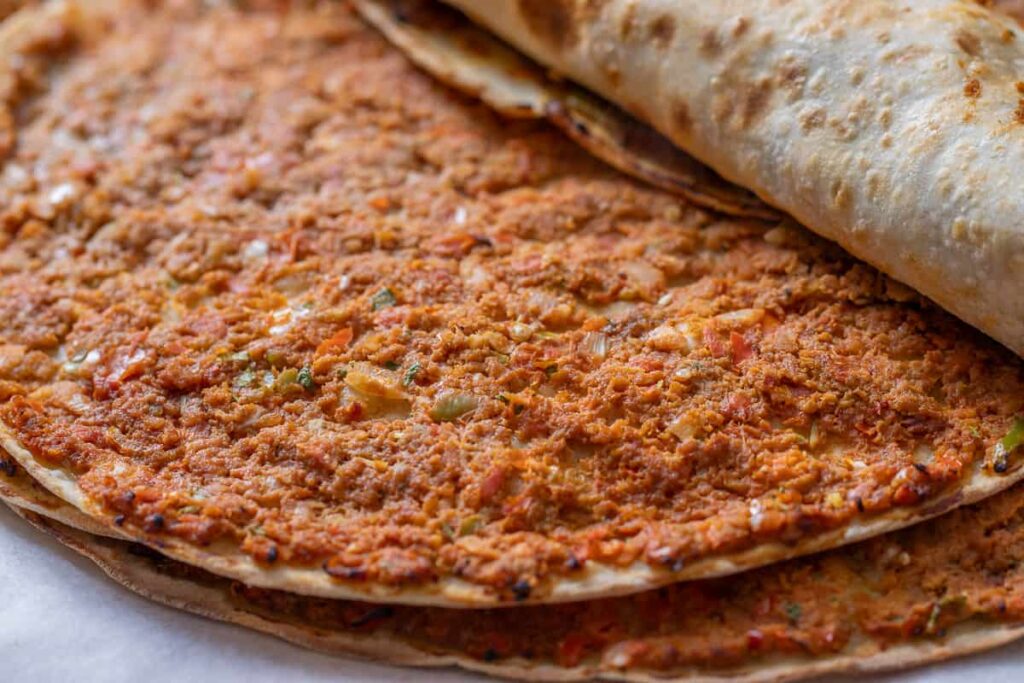
Turkish Lahmacun is a crispy flatbread topped with a flavorful meat mixture. Often called “Turkish pizza,” this popular street food features a thin, round dough covered with minced lamb or beef combined with vegetables and spices.
The topping typically includes ground meat, red peppers, shallots, and garlic. You can easily make this at home using a food processor to blend the meat mixture.
After baking, the flatbread becomes crispy while the meat topping remains juicy. You can serve lahmacun rolled up or folded, often with fresh herbs and a squeeze of lemon.
This spicy, crispy treat makes a delicious meal or appetizer that brings authentic Turkish flavors to your table.

8. Turkish Pide
Turkish Pide is a delicious flatbread that’s often compared to pizza. It has a boat-shaped appearance and comes with various tasty toppings.
You can find pide with cheese, spiced ground meat, sausage, vegetables, or a combination of these. The dough is stretched into an oval shape, topped with fillings, and baked until golden.
This popular Turkish dish is considered a type of “slow-cooked fast food” in Turkey. You can serve it as a snack or main course.
Making pide at home is easier than you might think. You’ll need basic ingredients like flour, yeast, and salt for the dough, plus your choice of toppings.

9. Red Lentil Soup
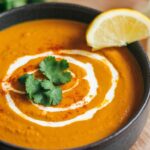
Red Lentil Soup, or “Kırmızı Mercimek Çorbası,” is a beloved Turkish staple that combines simplicity with rich flavor. This velvety soup features red lentils as its star ingredient.
You’ll need red lentils, onions, carrots, and potatoes as the base. Some recipes include bulgur wheat or rice for added texture and heartiness.
The soup is seasoned with dried mint and gets its distinctive taste from a mix of spices. It’s traditionally finished with a squeeze of lemon before serving.
This nutritious soup is both easy to prepare and deeply satisfying. You can make it year-round as a starter or even as a light main dish when served with bread.

10. Doner Kebab
Doner Kebab is one of Turkey’s most beloved street foods that has gained worldwide popularity. This dish features thinly sliced meat that’s been slow-roasted on a vertical rotisserie.
Traditional doner kebab can be made with lamb, beef, or chicken. The meat is marinated in a flavorful mixture of yogurt, lemon juice, and Middle Eastern spices before cooking.
You can enjoy doner kebab wrapped in warm pita bread or served over rice. It’s typically accompanied by fresh vegetables and a tangy yogurt sauce.
To make doner at home, you can use ground meat formed into a loaf or marinated meat slices. The key is achieving that perfect balance of juicy meat and crispy edges.

11. Adana Kebab
Adana kebab is a popular Turkish dish made from ground lamb mixed with spices. It gets its name from the city of Adana in southern Turkey.
The traditional recipe combines minced lamb with red onion, garlic, parsley, and spices like sumac and red pepper flakes. Some versions may use ground beef or even chicken as alternatives.
The meat mixture is carefully shaped onto wide, flat metal skewers and grilled over hot coals. This cooking method gives the kebab its distinctive charred flavor.
You can serve Adana kebab with flatbread, grilled vegetables, and yogurt sauce. It’s often accompanied by sumac-sprinkled onions and fresh herbs for a complete meal.

12. Chicken Shish Kebab
Chicken Shish Kebab is a popular Turkish dish made with marinated chunks of chicken grilled on skewers. The marinade typically includes yogurt, olive oil, lemon juice, garlic, and spices like cumin, paprika, and red pepper flakes.
To make this at home, you’ll need to marinate your chicken for at least 2 hours. Some recipes include ketchup or tomato paste to add a hint of sweetness and color to the meat.
Cook the skewers on a grill for 8-10 minutes until the chicken is fully cooked. This dish is often served with rice, flatbread, and a fresh salad for a complete Turkish meal.

13. Eggplant Kebab
Eggplant Kebab is a beloved Turkish dish that showcases the versatility of eggplant in Turkish cuisine. This flavorful meal combines tender eggplant with seasoned meat, creating a perfect balance of textures and tastes.
The dish is typically prepared by layering sliced eggplants with seasoned ground meat, tomatoes, and peppers. When baked, the eggplant becomes melt-in-your-mouth soft while absorbing the savory flavors of the meat.
A popular variation called Alinazik features grilled and pureed eggplants mixed with yogurt, topped with ground meat. You can easily make this at home by baking the ingredients together until the eggplant is tender and the flavors meld.

14. Lamb Kofta
Lamb Kofta is a beloved Turkish dish made from ground lamb mixed with aromatic spices. The meat is molded onto skewers and grilled to perfection.
To make this at home, combine lamb mince with chopped green chilies, onion, garlic, and ginger. Add a blend of Middle Eastern spices for authentic flavor.
This dish takes about 30 minutes to prepare and cook. You can serve your koftas with a garlicky yogurt sauce, fresh vegetables, and warm pita bread.
For a complete meal, pair your lamb kofta with kisir, a traditional Turkish bulgur wheat salad made with tomato, pomegranate, parsley, and lemon.

15. Chicken Shawarma
Chicken Shawarma is a popular Turkish dish known for its flavorful marinated meat. It features chicken thighs seasoned with a mix of warm Middle Eastern spices that create a delicious flavor profile.
The meat is traditionally cooked on a vertical rotisserie, allowing fat to drip down and flavor the meat below. You can make this at home by marinating chicken in spices like cumin, paprika, and garlic.
Serve your shawarma wrapped in flatbread with tahini yogurt sauce for an authentic experience. This dish makes a quick weeknight dinner that’s both satisfying and impressive.

16. Turkish Moussaka
Turkish Moussaka, known as “musakka” in Turkey, differs from its Greek cousin. It’s a simpler, lighter dish without the bechamel sauce layer.
The dish features roasted eggplant with ground beef or lamb in a tomato-based sauce. Some versions also use potatoes instead of or alongside eggplant.
Turkish Moussaka is seasoned with sumac and pepper paste, giving it a unique flavor profile. It’s a popular dish found in many Turkish households and traditional restaurants called “lokantas.”
You can easily prepare this comforting meal for a weeknight dinner. The combination of tender vegetables and seasoned meat makes it a satisfying and flavorful dish.

17. Imam Bayildi
Imam Bayildi is a traditional Turkish dish made with whole eggplants stuffed with a flavorful mixture. The name translates to “the Imam fainted,” suggesting how delicious it is.
This dish belongs to the zeytinyağlı family – vegetables braised in olive oil. The eggplants are typically filled with onions, garlic, tomatoes, and herbs.
Imam Bayildi is completely vegetarian, making it a perfect side dish or main course. You can serve it hot or at room temperature.
The combination of tender eggplant with the aromatic filling creates a comforting, flavorful experience that showcases the best of Turkish cuisine.

18. Turkish Dolma
Turkish Dolma is a popular dish where vegetables or leaves are stuffed with a flavorful filling. The most common version uses grape leaves filled with rice and ground beef.
The filling typically includes rice, ground beef, onions, and aromatic herbs like mint and parsley. Some recipes add tomato paste and pepper paste for extra flavor.
To prepare dolma, you mix the filling ingredients, then carefully wrap them in grape leaves, cabbage, or other vegetables. The stuffed packages are then arranged in a pot and simmered until tender.
You can serve dolma warm or at room temperature. They’re often accompanied by yogurt, which creates a perfect balance with the savory stuffed leaves.

19. Stuffed Grape Leaves
Stuffed grape leaves, known as Dolma or Sarma in Turkish cuisine, are delicious little parcels of flavor. The traditional recipe involves grape leaves wrapped around a filling of rice, herbs, and sometimes ground meat.
You can find both vegetarian (zeytinyağlı) and meat versions in Turkey. The vegetarian version typically includes rice, herbs, currants, and olive oil for a bright, fresh taste.
To make them, you place the filling on a grape leaf, then roll it up neatly. These are usually cooked slowly in olive oil and water until tender.
These bite-sized treats are perfect as an appetizer or side dish. They’re often served at room temperature with a squeeze of lemon juice.

20. Sujuk
Sujuk is a flavorful Turkish sausage made from ground beef mixed with a variety of spices. It’s a versatile ingredient that adds rich flavor to many dishes.
You can enjoy sujuk for breakfast by frying slices until crispy and serving with eggs. This popular morning meal is simple but incredibly satisfying.
Beyond breakfast, sujuk works well on pizza, in pasta sauces, or even in quesadillas for a spicy twist. The sausage’s distinct flavor comes from its unique spice blend.
You can find sujuk in specialty markets or try making it from scratch at home. Its bold taste makes it a standout addition to any meal you prepare.

21. Turkish Baklava
Turkish Baklava is a sweet pastry that has gained worldwide fame for its rich, nutty flavor and flaky texture. This dessert consists of layers of phyllo dough filled with chopped nuts and sweetened with syrup or honey.
You can make baklava at home with phyllo pastry, butter, sugar, and nuts like pistachios or walnuts. The key is to layer the thin sheets of dough with melted butter between each layer.
After baking until golden brown, you pour a sweet syrup over the hot pastry. This creates the signature sweet and crunchy texture that makes Turkish baklava so special.
Many variations exist, allowing you to customize this classic dessert to your taste preferences.
Culinary Traditions of Turkey
Turkish cuisine reflects centuries of cultural exchange and regional diversity. It combines Mediterranean, Middle Eastern, Central Asian, and Balkan influences to create distinctive flavors and cooking techniques.
Historical Influences on Turkish Cuisine
Turkish food has evolved through multiple empires and civilizations. The Ottoman Empire (1299-1922) played a crucial role in developing what we now recognize as Turkish cuisine. Palace kitchens employed hundreds of cooks who created elaborate dishes that eventually influenced regional cooking.
Central Asian nomadic traditions brought meat cooking techniques like kebabs to Turkey. When Turkic peoples migrated westward, they combined their cooking methods with Byzantine and Persian influences.
The spice trade greatly impacted Turkish cuisine. Situated along major trade routes, Turkey gained access to spices like cumin, sumac, and saffron that became essential in their cooking.
Religious practices also shaped food traditions. Many dishes evolved around Islamic holidays and customs, while the concept of sharing meals remains central to Turkish food culture.
Regional Variations and Ingredients
Turkey’s diverse geography creates distinct regional cooking styles. Coastal regions embrace Mediterranean ingredients with olive oil-based dishes, fresh vegetables, and seafood featuring prominently.
Eastern Turkey shows stronger Middle Eastern influences with more spices and rich meat dishes. Kebabs, stews, and flatbreads are staples in this region.
Central Anatolia focuses on wheat-based foods, pastries, and hearty meat dishes suited to the continental climate.
Key ingredients found throughout Turkish cuisine include:
- Staples: Rice, bulgur wheat, legumes
- Proteins: Lamb, beef, chicken, yogurt
- Produce: Eggplants, peppers, tomatoes, onions
- Herbs/Spices: Mint, parsley, oregano, sumac, red pepper
The regional differences showcase how Turkish cooks adapt to local ingredients while maintaining core cooking principles that unite this diverse cuisine.
Cooking Techniques in Turkish Cuisine
Turkish cooking techniques transform simple ingredients into flavorful dishes through expert spice combinations and time-honored cooking methods. These traditional approaches help create the distinct tastes that make Turkish food so beloved worldwide.
Common Spices and Seasonings
Turkish cuisine relies on a vibrant palette of spices and seasonings that give dishes their characteristic flavors. Sumac, a tangy, deep red spice, appears frequently in salads and meat dishes, adding a lemony zest without acidity.
Pul biber (red pepper flakes) and kirmizi biber (paprika) provide varying levels of heat and color to many recipes. You’ll find these in everything from kebabs to soups.
For aromatic depth, Turkish cooks use cumin, mint, and oregano. These herbs enhance meats and vegetable dishes without overpowering them.
Baharat, a spice blend similar to garam masala, typically contains:
- Black pepper
- Cumin
- Cinnamon
- Cloves
- Nutmeg
- Cardamom
Traditional Cooking Methods
Turkish cooking methods have evolved over centuries, emphasizing techniques that develop deep flavors and preserve nutritional value.
Slow cooking remains fundamental. It allows meats to become tender and spices to fully develop.
You’ll find many dishes prepared in a güveç (clay pot), which distributes heat evenly and locks in moisture. This method creates intensely flavorful stews and casseroles.
Mangal (charcoal grilling) gives Turkish kebabs their distinctive smoky flavor. The technique requires controlling heat carefully to char the exterior while keeping the interior juicy.
Wood-fired ovens produce Turkey’s incredible flatbreads and pide. These ovens reach temperatures that create the perfect crisp-chewy texture impossible to achieve in standard ovens.
Preservation techniques like fermentation create signature items such as yogurt and pickled vegetables, adding tangy components to balance rich dishes.