Irish cuisine offers a wealth of traditional dishes that combine simple ingredients with hearty flavors.
From savory stews to comforting potato dishes, these recipes showcase Ireland’s culinary heritage that has been passed down through generations.
Exploring traditional Irish recipes allows you to connect with the Emerald Isle’s rich food culture beyond the typical corned beef and cabbage.
You’ll discover classics like Irish soda bread, colcannon, and farmhouse favorites that bring authentic Irish tastes to your table. These time-tested recipes provide a delicious way to celebrate Irish traditions any time of year.
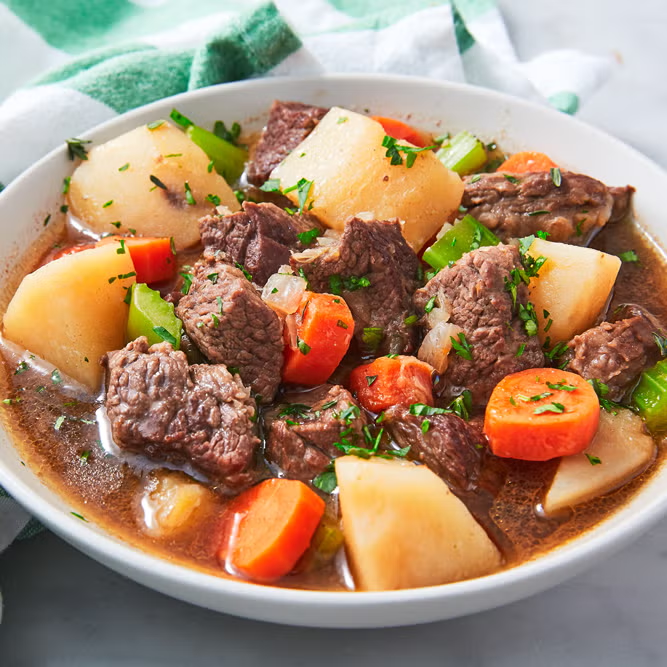
1. Irish Stew
Irish Stew is a classic comfort food from Ireland. It’s made with tender lamb, potatoes, onions, and other vegetables simmered in a rich broth.
The traditional recipe uses lamb shoulder cut into chunks, though some versions use beef. You’ll find it’s perfect for cold weather or St. Patrick’s Day celebrations.
Most Irish families have their own version passed down through generations. The key is slow cooking to allow the flavors to blend together.
For an authentic taste, try making it with lamb, root vegetables, and fresh herbs. It’s typically served hot with a side of Irish soda bread.

2. Beef and Guinness Pie
Beef and Guinness Pie is a hearty Irish dish that combines tender beef with the rich flavor of Guinness stout. This comfort food features chunks of beef chuck slow-cooked until they become melt-in-your-mouth tender.
The filling includes onions, carrots, and sometimes mushrooms, all simmered in a velvety sauce enriched with Guinness. This creates a deep, robust flavor that’s distinctly Irish.
You’ll find the rich stew-like filling encased in flaky pastry. The result is a savory pie perfect for cold weather or celebrating Irish traditions.
Making this pie at home allows you to enjoy authentic Irish cooking with simple ingredients. The bacon added to some recipes gives an extra layer of flavor.
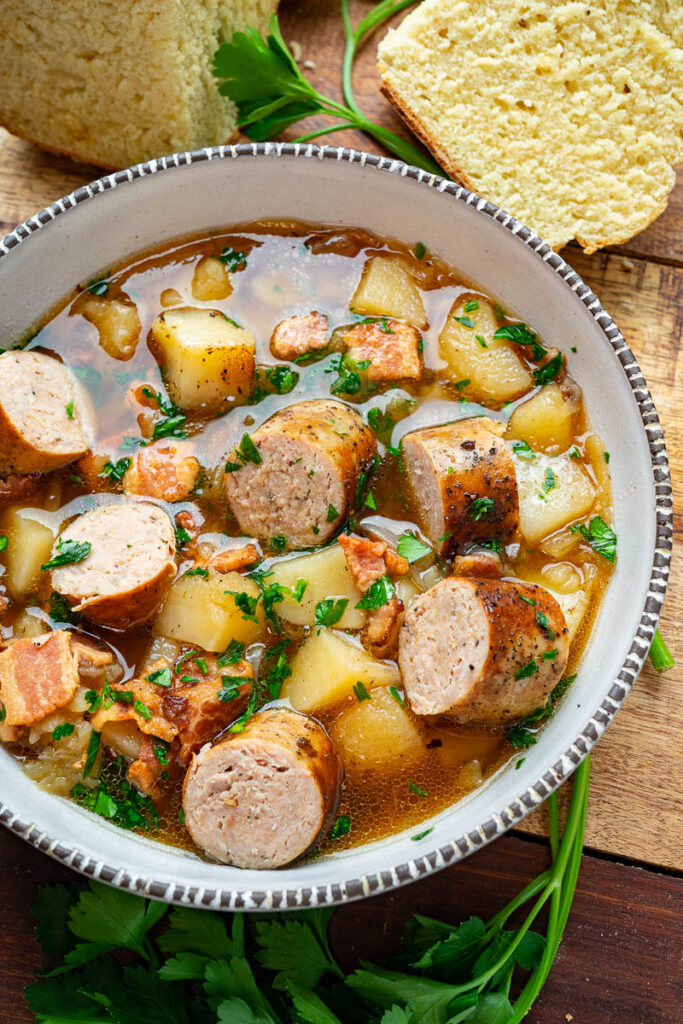
3. Dublin Coddle
Dublin Coddle is a traditional Irish stew made with sausages, bacon, potatoes, and onions. It’s a hearty comfort food that has been popular in Ireland for generations.
The ingredients are typically layered and slowly braised in water or broth until everything is tender and flavorful. Some recipes call for browning the meats first for extra flavor.
You can enhance your coddle with stout beer instead of water for a richer taste. This one-pot meal is especially popular in Dublin, where families would let it simmer gently while they were at evening mass.
It’s perfect for St. Patrick’s Day celebrations or any cold evening when you need a filling, warming meal.

4. Colcannon Potatoes
Colcannon is a traditional Irish dish that combines creamy mashed potatoes with cabbage or kale. This simple yet delicious recipe has been a staple in Irish homes for generations.
To make colcannon, you’ll need potatoes, cabbage or kale, butter, milk, and green onions. Some recipes also include bacon for extra flavor.
The process involves boiling potatoes until tender, then mashing them with butter and milk. Meanwhile, you cook the cabbage or kale separately before mixing it with the potatoes.
Traditionally served with more melted butter on top, colcannon makes a perfect side dish for St. Patrick’s Day celebrations or any meal throughout the year.

5. Boxty Pancakes
Boxty is a traditional Irish potato pancake that combines both grated raw potatoes and mashed potatoes for a unique texture. This creates a perfect balance of crispy edges and a fluffy interior that sets it apart from other potato pancakes.
To make boxty, you’ll need mashed potatoes, grated raw potatoes, flour, eggs, and baking soda. Some recipes also include grated onion for extra flavor.
When cooked properly, boxty pancakes develop beautiful golden-brown edges while maintaining a tender center. You can serve them as part of a traditional Irish breakfast or as a side dish with dinner.
Boxty is versatile enough to pair with many different toppings, from savory options like smoked salmon to sweet accompaniments like apple sauce.

6. Irish Soda Bread
Irish soda bread is a quick bread that doesn’t need yeast to rise. Instead, it uses baking soda and buttermilk to create its signature texture.
Traditional Irish soda bread contains just four simple ingredients: flour, salt, baking soda, and buttermilk. Some recipes use half whole wheat flour for added texture and flavor.
You can prepare this bread in just 10 minutes, though you’ll need to let it bake. The bread turns out with a crusty exterior and soft interior.
For the best flavor, make your Irish soda bread several hours before serving or even the day before. This gives the flavors time to develop fully.

7. Barmbrack
Barmbrack is a traditional Irish fruit loaf that has deep roots in Irish culture. This sweet bread is packed with tea-soaked dried fruits and often spiced with cinnamon and nutmeg.
While historically associated with Halloween celebrations in Ireland, barmbrack (or báirín breac in Irish) is now enjoyed year-round as a teatime treat. The name “barmbrack” comes from “báirín” meaning loaf and “breac” meaning speckled, referring to the fruits dotted throughout.
You can enjoy this delicious bread toasted and spread with a thick layer of butter. It’s simple to make, as everything gets mixed in one bowl before baking.

8. Shepherd’s Pie
Shepherd’s Pie is a hearty Irish dish that warms you up on cold days. Traditional Irish versions use ground lamb, though beef is also common in what’s sometimes called “cottage pie.”
The meat is cooked with vegetables like onions, carrots, peas, and corn in a rich gravy. Some recipes add Guinness for extra flavor.
The filling is topped with creamy mashed potatoes, often with cheese mixed in or sprinkled on top. When baked, the potato crust forms a golden layer that complements the savory filling beneath.
You can make this comfort food for family dinners or special occasions like St. Patrick’s Day.

9. Stout-Braised Lamb Shanks
Stout-braised lamb shanks are a hearty Irish dish perfect for cold evenings. The lamb becomes tender after slow cooking in dark stout beer, usually Guinness.
To make this dish, you’ll need lamb shanks, onions, garlic, broth, and stout beer. First, brown the lamb shanks in a Dutch oven, then remove them.
Cook onions and garlic in the same pot, then return the lamb and add the stout and broth. The mixture should simmer slowly for several hours until the meat falls off the bone.
This dish is often served for special occasions like St. Patrick’s Day. Pair it with mashed potatoes to soak up the rich, flavorful sauce.

10. Corned Beef and Cabbage
Corned beef and cabbage is a classic dish often associated with Irish cuisine and St. Patrick’s Day celebrations. This hearty meal combines tender corned beef brisket with cabbage, potatoes, and carrots.
To prepare this dish, you’ll simmer the beef brisket for several hours until it becomes tender. The vegetables are typically added toward the end of cooking.
You can enhance the flavor by cooking everything in a Dutch oven. This method allows the ingredients to absorb the savory broth created during the long cooking process.
This dish is perfect for family gatherings and has become a traditional centerpiece for St. Patrick’s Day feasts in many households.

11. Irish Brown Bread
Irish Brown Bread is a rustic, no-knead loaf that’s a staple in Irish homes. Made with whole wheat flour, this bread has a crunchy exterior and soft interior.
The recipe typically includes wheat germ, rolled oats, and buttermilk, giving it a rich wheat flavor and hearty texture. Some versions add a touch of molasses for subtle sweetness.
You can prepare this simple bread quickly with no kneading required. It’s perfect alongside afternoon tea, hot soup, or Irish stew.
For breakfast, enjoy a slice with butter. This authentic bread pairs especially well with Guinness-based dishes for a true taste of Ireland.

12. Fish Pie
Fish pie is a beloved Irish comfort food, perfect for cold, gloomy days. It’s similar to shepherd’s pie but swaps meat for fish and often includes spinach.
Traditional Irish fish pies typically use simple white fish like cod, haddock, or flounder. Cod is a popular choice for its mild flavor and firm texture.
The dish is topped with creamy mashed potatoes, creating a hearty meal that’s been a staple in Irish households for generations. Irish fishermen particularly cherish this dish as it showcases the bounty of the sea.
You can make this dish with freshly caught fish for the most authentic experience. It’s a comforting meal that brings a taste of Ireland to your table.

13. Cottage Pie
Cottage Pie is a classic Irish comfort food that features ground beef cooked with vegetables in a savory gravy, then topped with mashed potatoes. This hearty dish differs from Shepherd’s Pie, which traditionally uses lamb instead of beef.
To make this dish, you’ll need ground beef, onions, carrots, peas, and corn simmered in a rich gravy made with beef broth. Some recipes include red wine for extra flavor.
The potato topping should be creamy and smooth, often with a golden-brown crust after baking. You can add your own twist by incorporating leftovers or adding cheese to the potato topping.
Cottage Pie makes for a filling family meal, especially during colder months when you need something warm and satisfying.

14. Black Pudding
Black pudding is a traditional Irish dish made from pork meat, animal fat, and blood. It often includes fillers like oatmeal or bread to create its distinctive texture.
The traditional Irish black pudding has a soft, crumbly texture. Many consider it completely delicious when prepared properly.
Recipes for black pudding vary throughout Ireland. Some versions include barley, breadcrumbs, or flour, but oatmeal is considered the old-fashioned thickener.
You can find black pudding served as part of a full Irish breakfast or used as an ingredient in other dishes. Its rich flavor adds depth to many traditional Irish meals.

15. White Pudding
White pudding is a traditional Irish breakfast dish similar to black pudding but without blood. It’s made with pork shoulder, fat, oatmeal, and spices.
The recipe typically includes pork shoulder with plenty of fat, medium oatmeal, water, onions, potato flour, salt, and a special seasoning mix. These ingredients are combined and shaped into sausages.
You can find white pudding served with a full Irish breakfast alongside rashers, sausages, and eggs. It has a mild flavor and soft texture that contrasts nicely with other breakfast items.
Try white pudding fried until the outside is crispy while the inside stays tender. It’s a hearty addition to your morning meal.

16. Millionaire’s Shortbread
Millionaire’s Shortbread, also known as Caramel Squares in Ireland, is a decadent three-layer dessert that will satisfy your sweet tooth.
The base consists of a simple, crisp shortbread that provides the perfect foundation. The middle layer features a rich, chewy caramel made from condensed milk and butter.
The top layer is a smooth chocolate ganache that completes this luxurious treat. Despite its fancy name, you can easily make this at home.
Some Irish recipes call for maple syrup or honey instead of corn syrup in the caramel layer. The combination of buttery shortbread, sweet caramel, and dark chocolate makes this treat truly worthy of its wealthy name.

17. Irish Apple Cake
Irish Apple Cake is a traditional dessert that’s perfect for celebrating St. Patrick’s Day. This cake features thinly sliced Granny Smith apples layered within a moist, cinnamon-flavored cake.
The cake has a dense, rich texture that pairs wonderfully with a cup of tea. Some recipes include a brown sugar streusel topping for extra sweetness and texture.
You can make this authentic treat even more special by serving it with custard sauce. It’s a simple yet delicious way to enjoy fresh apples when they’re in season.
This humble cake represents the practical, no-waste approach to cooking in Irish households where seasonal ingredients were fully utilized.

18. Scones
Scones are a beloved treat in Ireland, known for their simple ingredients and comforting taste. Traditional Irish scones have a lightly sweet crust and a moist, dense center.
The authentic recipe often uses just flour, baking soda, and buttermilk. Some versions add butter for richness, but the classic approach is beautifully minimalist.
You can enjoy these treats the Irish way by serving them with jam and cream or simply with butter. For an extra touch of sweetness, try them with honey and a pinch of sea salt.
Making Irish scones at home is easy and requires only basic ingredients. They’re perfect for breakfast or afternoon tea.

19. Seafood Chowder
Seafood Chowder is a beloved Irish comfort dish that combines the bounty of Ireland’s coastal waters. This creamy soup features a mix of fresh seafood like salmon, cod, and shrimp.
The chowder gets its rich texture from potatoes and a flavorful broth. Traditionally, it includes a variety of seafood, often with smoked fish adding depth of flavor.
You can make this hearty meal in about 30 minutes. The combination of tender fish, shellfish, and vegetables creates a satisfying one-pot meal.
Serve your chowder with a slice of Irish soda bread for an authentic experience. It’s common pub fare in Ireland but easy enough to prepare in your home kitchen.

20. Bangers and Mash
Bangers and Mash is a beloved Irish comfort dish featuring juicy pork sausages served over creamy mashed potatoes and topped with rich onion gravy. The name “bangers” comes from how sausages can burst when cooked.
For authentic flavor, try cooking your sausages in Guinness before finishing them in a pan. The mashed potatoes can be elevated with additions like Irish cheddar, cream cheese, or even cabbage and leeks (then called colcannon mash).
The onion gravy is what ties this dish together. Make it by slowly caramelizing onions and building a savory sauce with beef stock. This hearty meal is perfect for St. Patrick’s Day celebrations or any time you crave satisfying Irish cuisine.

21. Stout-Braised Beef Short Ribs
Stout-Braised Beef Short Ribs offer a taste of Irish comfort food at its finest. This dish features beef short ribs slowly simmered in dark Irish stout until they become fall-off-the-bone tender.
The cooking process is simple but requires patience. You’ll need about 15 minutes of prep time, then let the oven do the work. The dark-roasted barley in stout gives the meat a rich, sticky glaze.
For an authentic Irish meal, serve your stout-braised short ribs with colcannon, a traditional Irish dish of mashed potatoes mixed with cabbage or kale. The creamy potatoes perfectly complement the richness of the beef.
Historical Background of Traditional Irish Cuisine
Irish cooking has evolved over centuries, shaped by historical events, cultural exchanges, and the island’s natural resources. The cuisine developed from simple, hearty foods meant to sustain farming families to the diverse range of dishes enjoyed today.
Influences on Irish Cooking
Ireland’s culinary history begins with the ancient Celts, who relied heavily on dairy, grains, and wild game. When Christianity arrived, monasteries introduced new food preservation techniques and farming methods. The Norman invasion in the 12th century brought European cooking styles and spices to Irish kitchens.
The potato, now central to Irish cuisine, only arrived in the 16th century from the Americas. By the 1800s, it became the staple food for most Irish families due to its ability to grow in poor soil and its nutritional value.
Viking settlers influenced coastal communities, contributing fishing techniques and preservation methods like smoking and salting. This maritime influence remains strong in Irish seafood dishes today.
Evolution Through the Ages
The Great Famine (1845-1849) dramatically changed Irish food culture when potato blight destroyed the main food source for millions. During this devastating period, people relied on whatever was available, including potatoes and leeks, creating necessity-driven recipes that became traditional dishes.
Emigration following the famine spread Irish cooking worldwide, while those who remained developed new ways to use limited ingredients. Simple dishes like colcannon (mashed potatoes with cabbage) became staples out of necessity.
In modern times, Irish cooking has experienced a renaissance. Chefs are rediscovering old recipes mentioned in historical texts and updating them with contemporary techniques. Traditional celebrations still feature foods with historical significance, such as soul cakes for All Hallows’ Eve.
Today’s Irish cuisine proudly embraces its heritage while incorporating global influences, making it much more than just potatoes and stew.
Key Ingredients in Traditional Irish Recipes
Irish cooking relies on simple, wholesome ingredients that showcase the country’s agricultural heritage. These key components bring authentic flavor to dishes while reflecting Ireland’s cultural traditions.
Staple Ingredients
Potatoes form the backbone of Irish cuisine. Since the 1600s, they’ve been used in countless dishes like colcannon, boxty, and champ. You’ll find them mashed, roasted, or formed into breads and pancakes.
Dairy products play a crucial role in Irish cooking. Butter, particularly from grass-fed cows, adds richness to baked goods and everyday meals. Irish cheeses range from mild to sharp varieties.
Flour – typically wheat or oat – appears in soda breads and baked treats. Unlike many cuisines, traditional Irish recipes use baking soda rather than yeast as a leavening agent.
Meats commonly include lamb, beef, and pork (especially bacon). These proteins feature in hearty stews, roasts, and dishes like Dublin coddle or Irish bacon and cabbage.
Native Herbs and Spices
Sea salt enhances flavors in Irish cooking without overpowering the natural taste of ingredients. You’ll find it used moderately in most recipes.
Parsley brings freshness to numerous dishes. Both flat-leaf and curly varieties appear in stews, potato recipes, and as garnishes.
Thyme contributes an earthy, slightly floral note to meat dishes and stews. This hardy herb grows well in Ireland’s climate.
Black pepper adds subtle heat and depth. Unlike some cuisines, traditional Irish cooking uses spices conservatively.
Wild garlic (or regular garlic) provides a mild allium flavor to many savory dishes. It grows abundantly in Irish woodlands during spring.