African kitchens have been feeding the world’s appetite for bold flavor for centuries, long before “global cuisine” became a buzzword. From the smoky char of suya grilled over open coals to the slow-simmered warmth of a Moroccan tagine, these dishes carry real history in every pot. Cooking them at home means learning techniques passed down through generations, like fermenting injera batter or pounding fufu by hand.
This collection pulls together 19+ best traditional African food recipes spanning West, East, North, and Southern Africa, each one a dish worth knowing how to cook from scratch. You’ll find rich stews, grain staples, grilled meats, and a couple of desserts that deserve a spot on any dinner table.
Some of these recipes take an afternoon of patient simmering. Others come together in under an hour. Either way, you’ll walk away with new pantry staples (berbere spice, preserved lemons, harissa) and a better sense of how African cooks build layers of flavor with just a handful of ingredients.
1. Jollof Rice
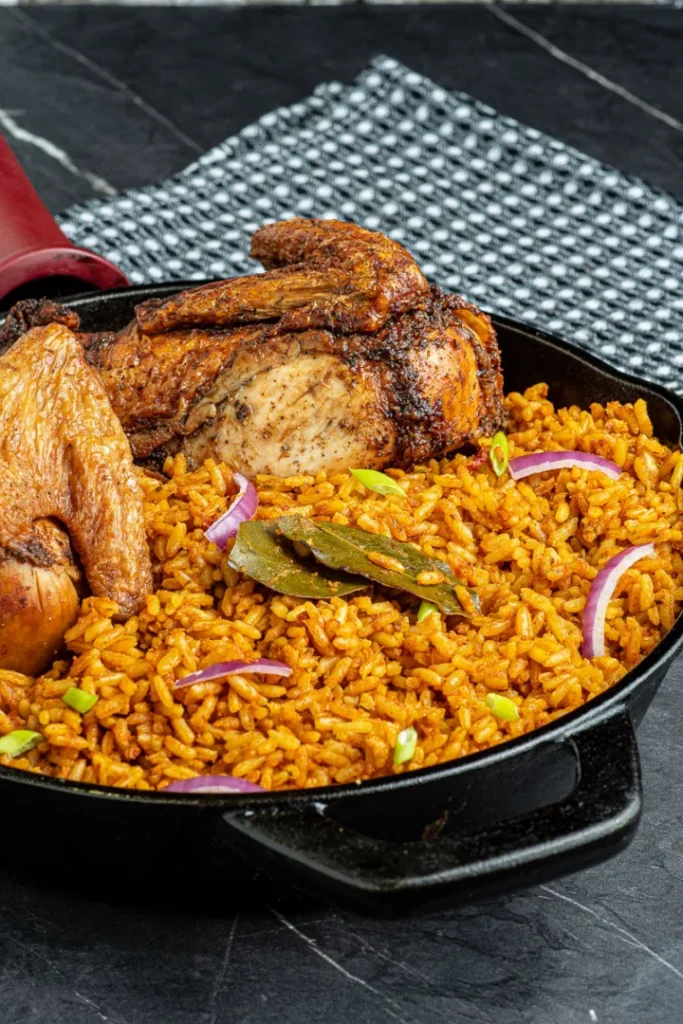
Jollof rice is West Africa’s most famous one-pot dish, a smoky, tomato-based rice that sparks friendly rivalry between Nigeria and Ghana over whose version reigns supreme. The rice simmers in a blended sauce of tomatoes, red bell peppers, and scotch bonnet peppers until every grain turns deep orange-red.
Yield: 6 servings | Prep: 20 minutes | Cook: 50 minutes
Ingredients:
- 3 cups long-grain parboiled rice
- 4 large tomatoes, blended
- 2 red bell peppers, blended
- 1 scotch bonnet pepper
- 1 large onion, chopped
- 1/3 cup vegetable oil
- 3 tbsp tomato paste
- 2 cups chicken stock
- 2 bay leaves
- 1 tsp curry powder
- 1 tsp thyme
- Salt to taste
Method:
- Blend tomatoes, bell peppers, scotch bonnet, and half the onion. Set aside.
- Heat oil in a deep pot, fry remaining onion until soft.
- Stir in tomato paste, cook 5 minutes.
- Add blended mixture, simmer 20 minutes until thickened and oil separates.
- Add stock, bay leaves, curry powder, thyme, and salt.
- Stir in rice, cover tightly, cook on low 30 minutes until tender.
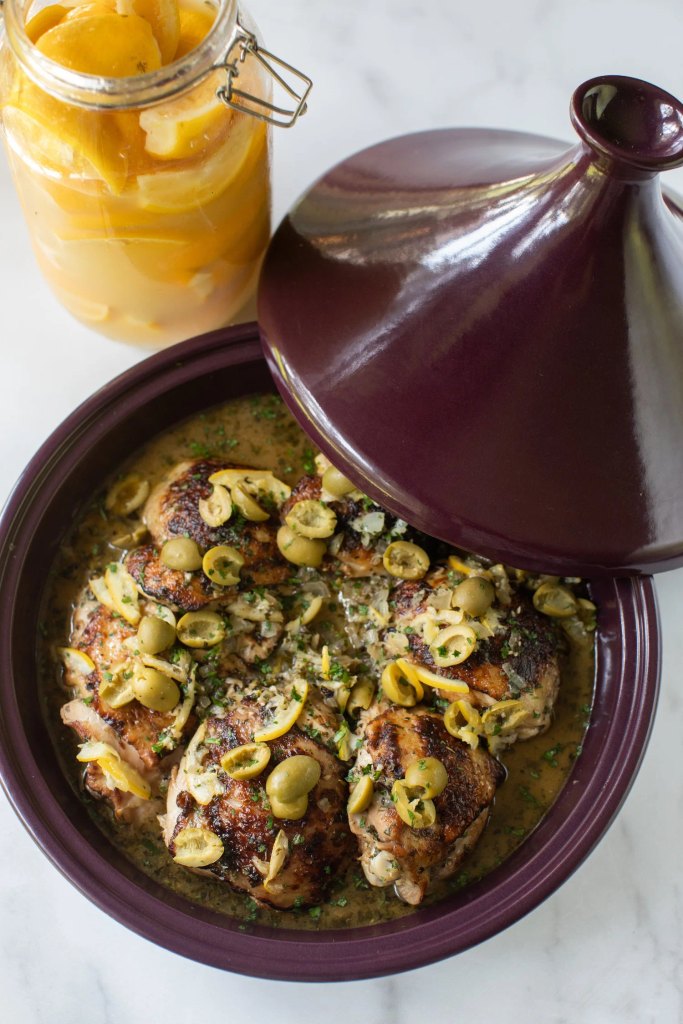
2. Chicken Tagine with Preserved Lemons and Olives
This Moroccan classic gets its signature tang from preserved lemons and briny green olives, simmered low and slow until the chicken falls off the bone. The cone-shaped tagine pot traps steam, keeping everything moist and deeply fragrant with saffron and ginger.
Yield: 4 servings | Prep: 15 minutes | Cook: 1 hour
Ingredients:
- 1 whole chicken, cut into pieces
- 2 preserved lemons, quartered
- 1 cup green olives
- 1 onion, sliced
- 3 garlic cloves, minced
- 1 tsp ground ginger
- 1/2 tsp saffron threads
- 1 tsp turmeric
- 3 tbsp olive oil
- 1 1/2 cups chicken stock
- Fresh cilantro for garnish
Method:
- Brown chicken in olive oil, remove and set aside.
- Sauté onion and garlic until soft.
- Stir in spices, return chicken to pot.
- Add stock, cover, simmer 40 minutes.
- Add preserved lemons and olives, cook 10 more minutes.
- Garnish with cilantro before serving.
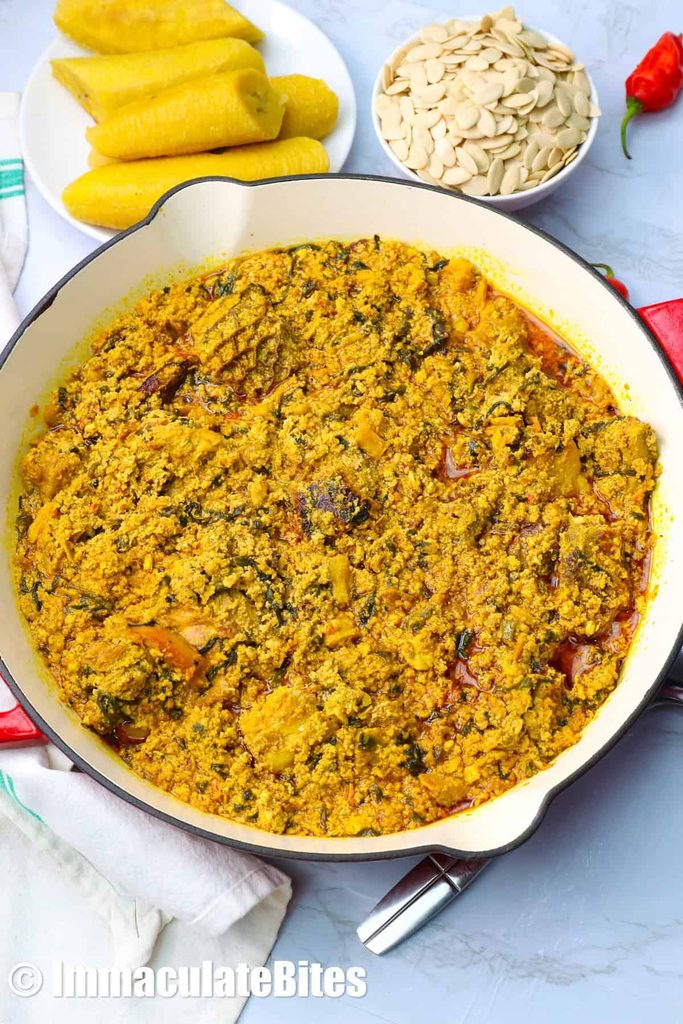
3. Egusi Soup
Egusi soup gets its thick, hearty texture from ground melon seeds, a Nigerian staple that pairs leafy greens with smoky stockfish and tender beef. It’s a soup built for scooping with pounded yam or fufu, not sipping from a bowl.
Yield: 6 servings | Prep: 20 minutes | Cook: 45 minutes
Ingredients:
- 2 cups ground egusi seeds
- 1 lb beef, cubed
- 1/2 lb smoked fish or stockfish
- 4 cups spinach or bitter leaf, chopped
- 1/2 cup palm oil
- 1 onion, chopped
- 2 tbsp ground crayfish
- 2 scotch bonnet peppers
- Salt and seasoning cubes to taste
Method:
- Boil beef with onion, salt, and seasoning until tender.
- Heat palm oil, fry egusi paste (mixed with a little water) for 10 minutes.
- Add beef, stock, crayfish, and peppers.
- Simmer 15 minutes, stir in fish.
- Fold in greens, cook 5 minutes more.
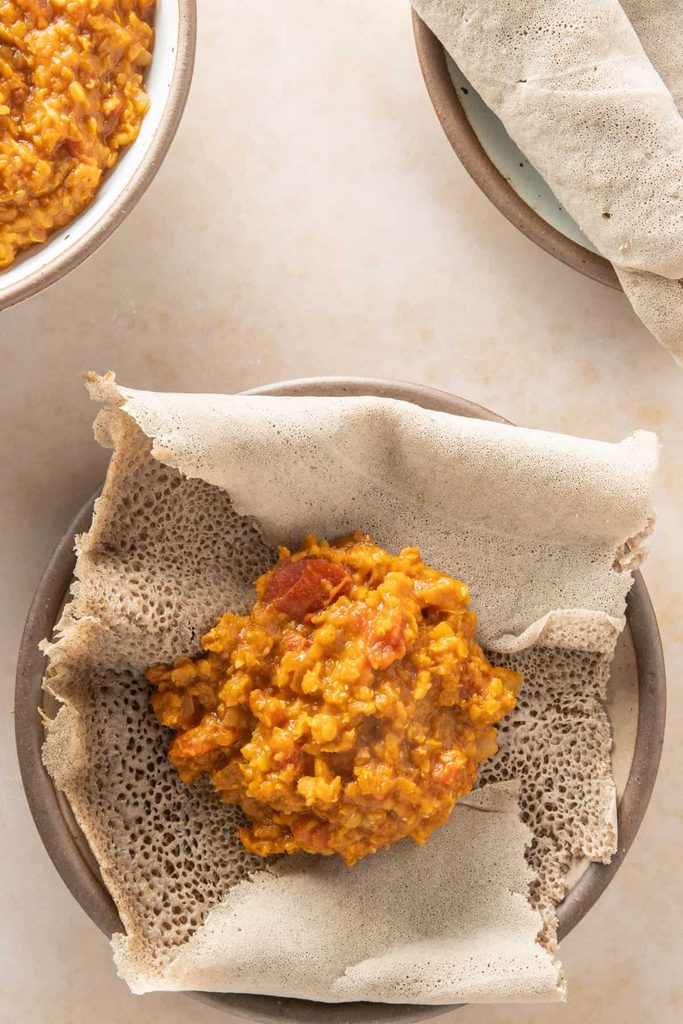
4. Injera with Misir Wot
Injera is Ethiopia’s spongy, tangy flatbread made from fermented teff flour, and it doubles as both plate and utensil. Misir Wot, a spiced red lentil stew built on berbere spice, is the classic topping that soaks into every bite.
Yield: 4 servings | Prep: 3 days fermenting + 20 minutes | Cook: 40 minutes
Ingredients (Misir Wot):
- 2 cups red lentils
- 1 onion, finely chopped
- 3 tbsp berbere spice
- 1/4 cup niter kibbeh (spiced butter) or oil
- 3 garlic cloves, minced
- 1 tsp ginger, minced
- 3 cups water
- Salt to taste
Method:
- Ferment teff batter 2-3 days for injera, then cook thin rounds on a hot griddle until bubbly.
- For the stew, sauté onion in niter kibbeh until golden.
- Add berbere, garlic, and ginger, cook 2 minutes.
- Stir in lentils and water, simmer 25 minutes until thick.
- Season and serve atop injera.
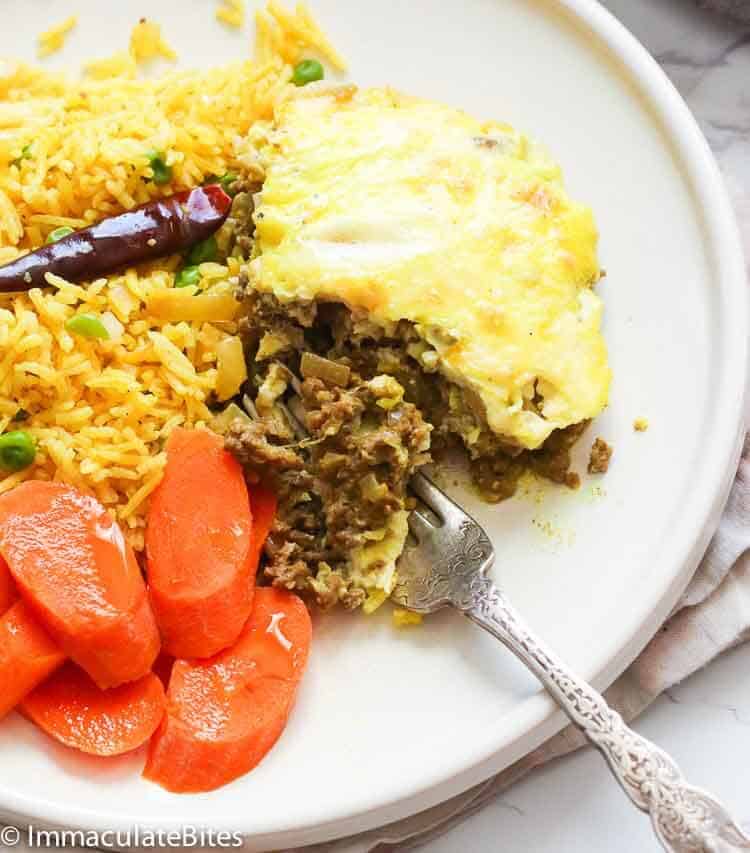
5. Bobotie
Bobotie is South Africa’s beloved baked dish, a curried ground beef casserole topped with a golden egg custard. The hint of sweetness from dried fruit and chutney sets it apart from any other meatloaf you’ve tried.
Yield: 6 servings | Prep: 20 minutes | Cook: 45 minutes at 350°F
Ingredients:
- 2 lbs ground beef
- 1 onion, chopped
- 2 tbsp curry powder
- 1/2 cup raisins
- 2 slices bread, soaked in milk
- 2 tbsp apricot chutney
- 2 eggs
- 1 cup milk
- 4 bay leaves
Method:
- Sauté onion, add beef and curry powder, cook until browned.
- Stir in raisins, chutney, and soaked bread.
- Press into a greased baking dish.
- Whisk eggs with milk, pour over top, add bay leaves.
- Bake at 350°F for 45 minutes until set and golden.
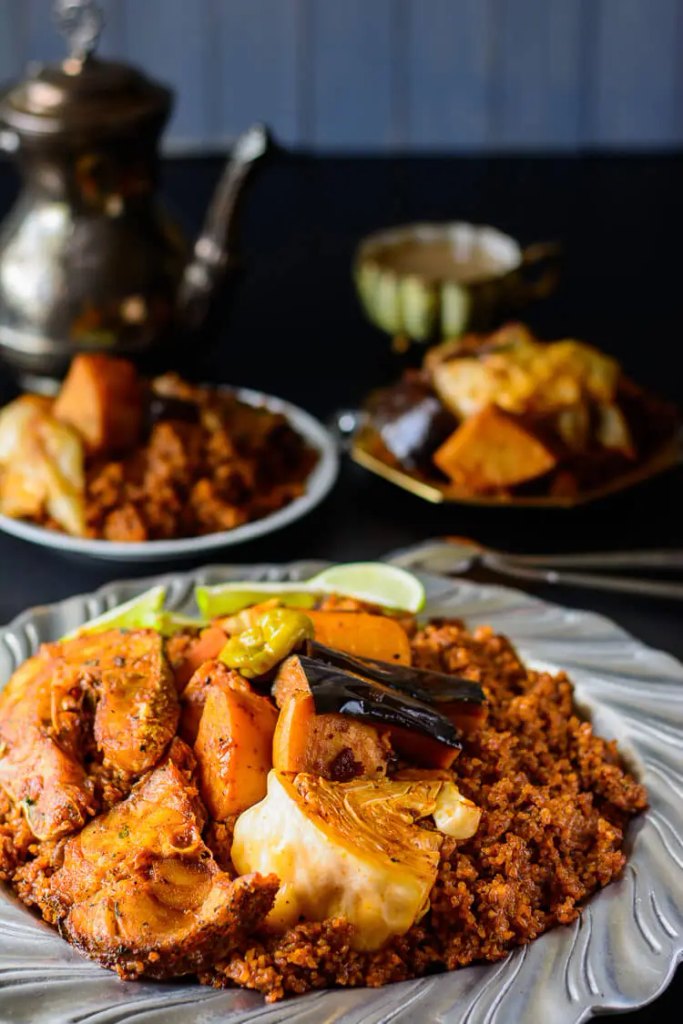
6. Thieboudienne
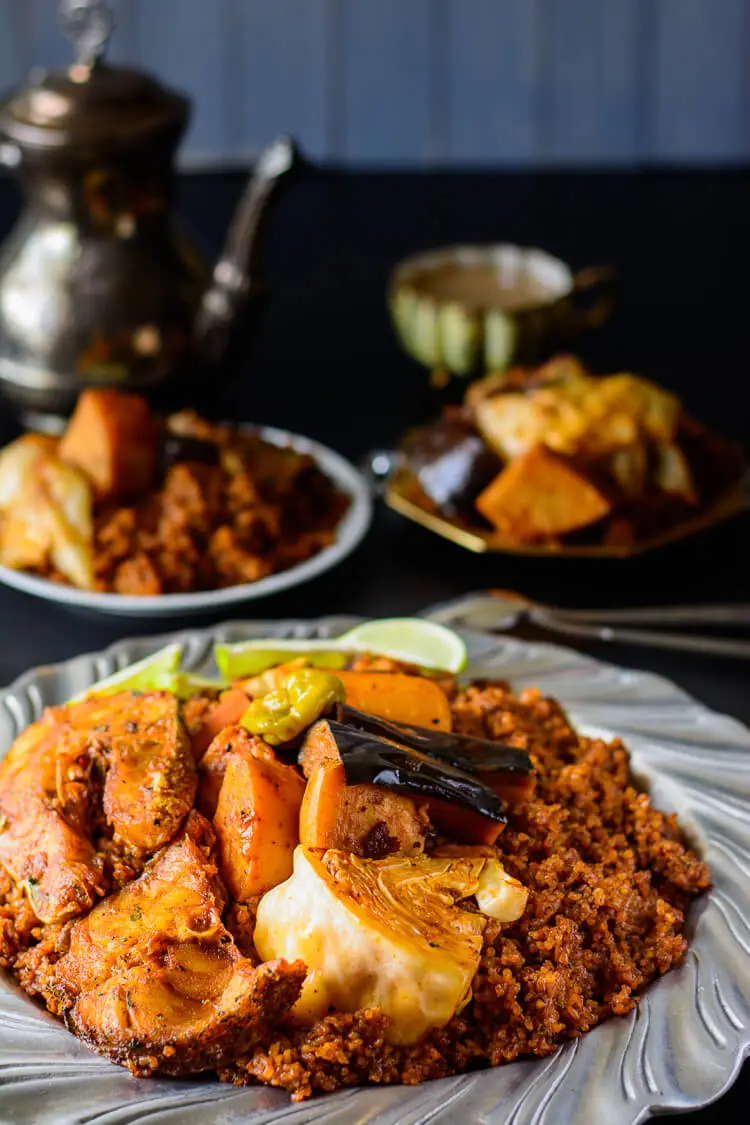
Thieboudienne is Senegal’s national dish, a vibrant one-pot rice and fish feast built on a tomato base thickened with tamarind. Vegetables like cassava, carrots, and cabbage simmer right alongside the fish, soaking up every bit of seasoning.
Yield: 6 servings | Prep: 25 minutes | Cook: 1 hour
Ingredients:
- 2 lbs whole fish, cut into steaks
- 3 cups broken rice
- 4 tomatoes, blended
- 3 tbsp tomato paste
- 1 cabbage wedge
- 2 carrots
- 1 piece cassava
- 1/2 cup oil
- 2 scotch bonnet peppers
- Parsley and garlic stuffing (chopped and mixed)
Method:
- Stuff fish with parsley-garlic mix, fry until golden, set aside.
- Sauté tomato paste in oil, add blended tomatoes, simmer 15 minutes.
- Add water, vegetables, and peppers, cook 20 minutes.
- Remove vegetables and fish, cook rice in the remaining broth 25 minutes.
- Serve rice topped with fish and vegetables.
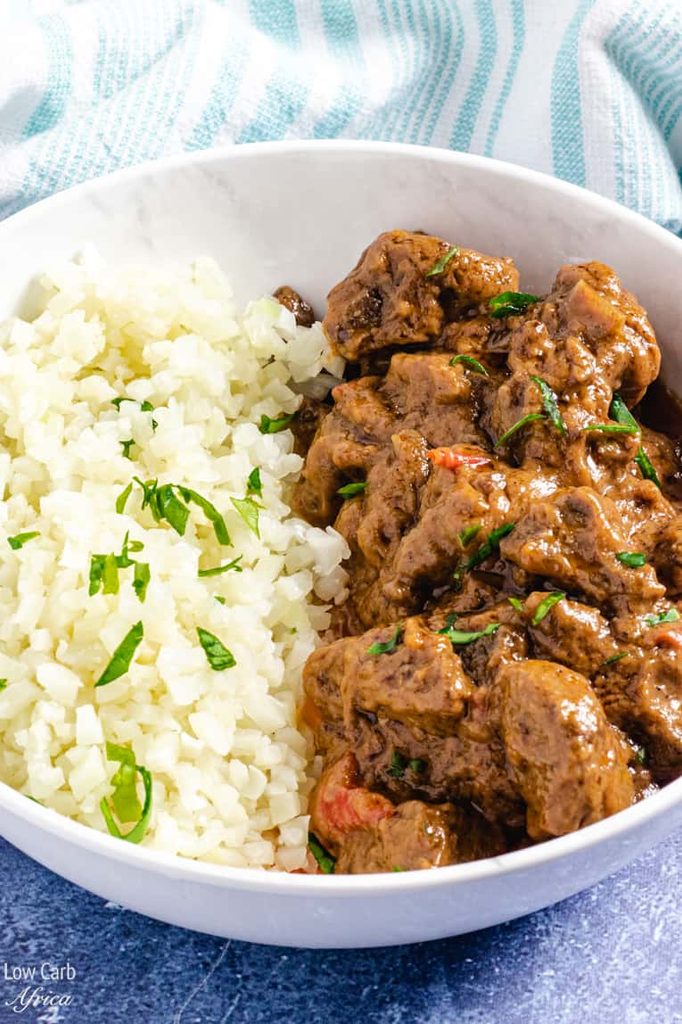
7. Maafe
Maafe is a West African peanut stew, creamy and savory with a nutty depth that comes from stirring peanut butter straight into a tomato-based broth. Chunks of beef or chicken simmer until tender in this Senegalese and Malian comfort food.
Yield: 5 servings | Prep: 15 minutes | Cook: 50 minutes
Ingredients:
- 2 lbs beef or chicken, cubed
- 1 cup natural peanut butter
- 3 tomatoes, blended
- 2 tbsp tomato paste
- 1 onion, chopped
- 2 cups beef or chicken stock
- 1 scotch bonnet pepper
- 2 carrots, sliced
- Salt to taste
Method:
- Brown meat with onion in a large pot.
- Add tomato paste and blended tomatoes, cook 10 minutes.
- Whisk peanut butter with stock until smooth, pour into pot.
- Add carrots and pepper, simmer 35 minutes until meat is tender and sauce thickens.
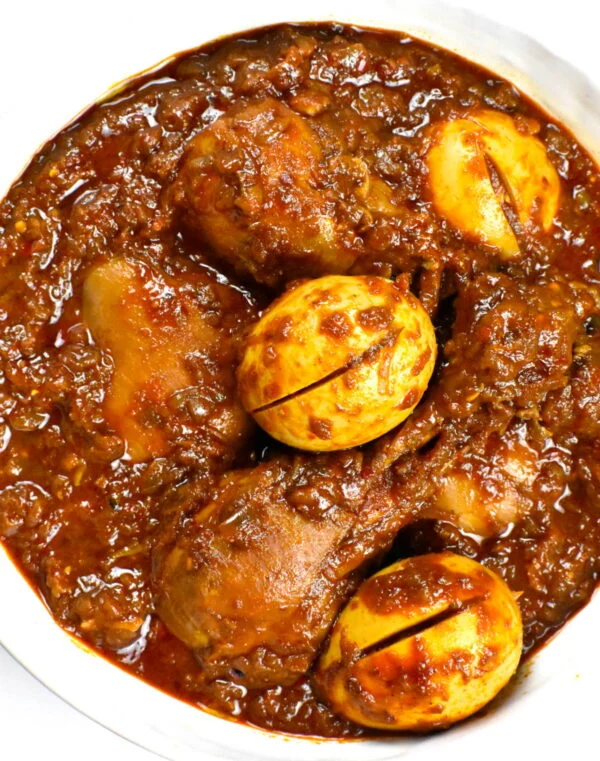
8. Doro Wat
Doro Wat is Ethiopia’s fiery chicken stew, simmered for hours in berbere spice until the sauce turns deep red and clings to every piece of meat. Hard-boiled eggs soak in the sauce too, picking up that same smoky heat.
Yield: 5 servings | Prep: 20 minutes | Cook: 1 hour 15 minutes
Ingredients:
- 1 whole chicken, cut into pieces
- 4 red onions, finely chopped
- 1/2 cup berbere spice
- 1/4 cup niter kibbeh
- 4 hard-boiled eggs
- 4 garlic cloves, minced
- 1 tbsp ginger, minced
- 1 cup water
- Salt to taste
Method:
- Cook onions alone (no oil) in a pot, stirring until soft and dry, about 15 minutes.
- Add niter kibbeh, berbere, garlic, and ginger, cook 5 minutes.
- Add chicken and water, cover, simmer 45 minutes.
- Add eggs, simmer 15 minutes more.
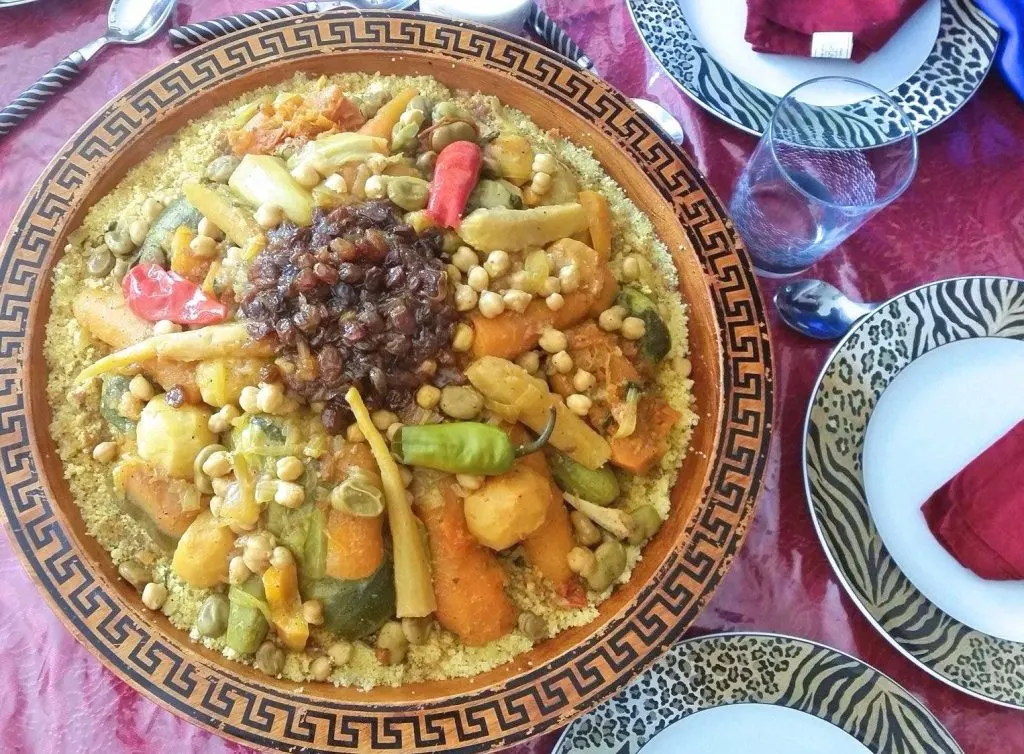
9. Moroccan Seven-Vegetable Couscous
This couscous dish layers seven vegetables over a fragrant, spiced broth, traditionally served for Friday family gatherings across Morocco. Steamed couscous grains stay light and fluffy, built to soak up the broth ladled on top.
Yield: 6 servings | Prep: 25 minutes | Cook: 1 hour
Ingredients:
- 3 cups couscous
- 2 carrots, chunked
- 2 turnips, chunked
- 1 zucchini, chunked
- 1 cup pumpkin, chunked
- 1 cup cabbage, chunked
- 1 onion, chopped
- 1 can chickpeas, drained
- 1 tsp turmeric
- 1 tsp ginger
- 4 cups vegetable stock
Method:
- Sauté onion with turmeric and ginger.
- Add stock and harder vegetables (carrots, turnips), simmer 20 minutes.
- Add remaining vegetables and chickpeas, cook 20 minutes more.
- Steam couscous per package directions, fluff with a fork.
- Serve couscous topped with vegetables and broth.
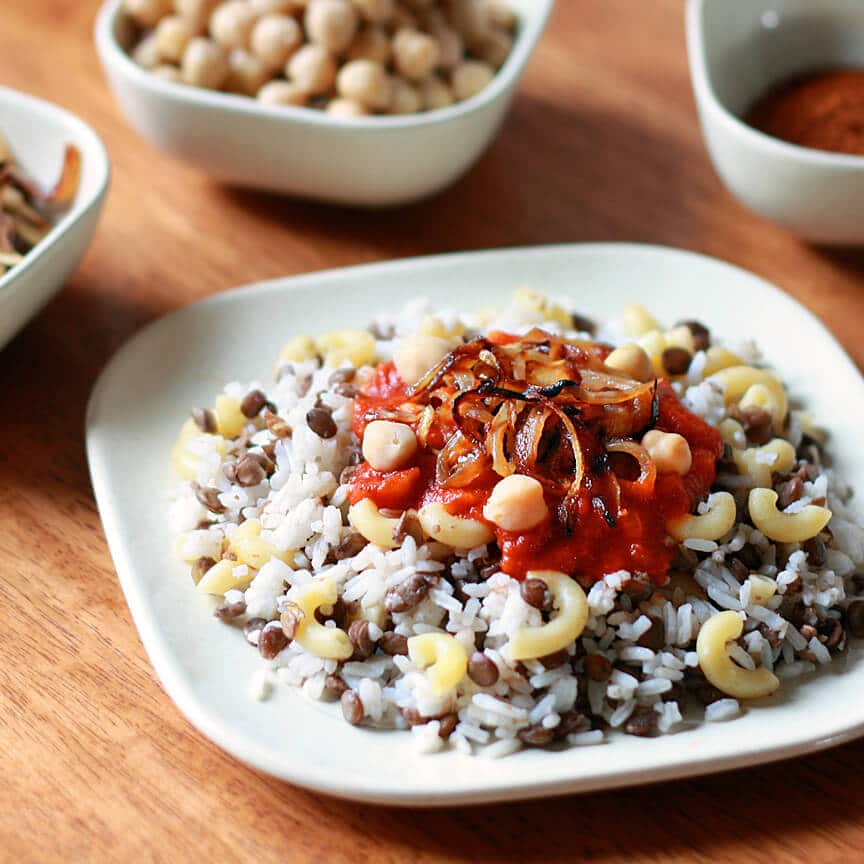
10. Koshari
Koshari is Egypt’s favorite street food, a comforting jumble of rice, lentils, and pasta topped with crispy fried onions and a tangy tomato sauce. Layering three different carbs sounds unusual, but the textures work beautifully together.
Yield: 5 servings | Prep: 20 minutes | Cook: 40 minutes
Ingredients:
- 1 cup rice
- 1 cup brown lentils
- 1 cup small pasta (elbow or ditalini)
- 2 onions, thinly sliced and fried crisp
- 3 cups tomato sauce
- 3 garlic cloves
- 2 tbsp vinegar
- 1 tsp cumin
- Oil for frying
Method:
- Cook rice, lentils, and pasta separately until tender.
- Simmer tomato sauce with garlic, vinegar, and cumin for 15 minutes.
- Fry onion slices until deep golden and crisp.
- Layer rice, lentils, and pasta in bowls.
- Top with tomato sauce and crispy onions.
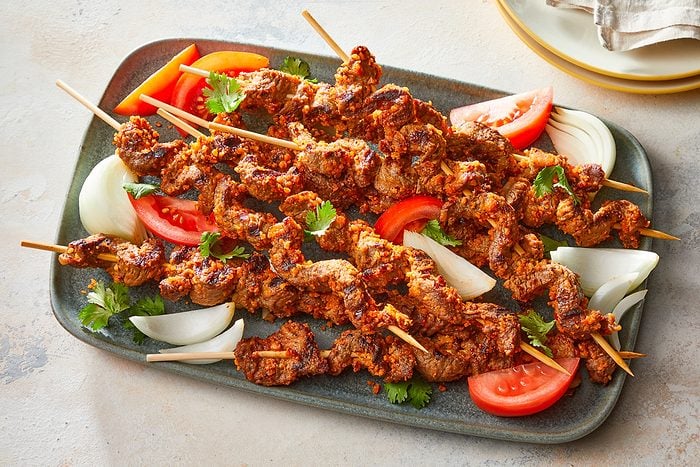
11. Beef Suya
Suya is Nigeria’s answer to the skewer, thin strips of beef coated in a peanut-based spice rub called yaji, then grilled over open flame until smoky and charred at the edges. Street vendors across West Africa sell it wrapped in newspaper, no fork required.
Yield: 4 servings | Prep: 20 minutes + 1 hour marinating | Cook: 15 minutes
Ingredients:
- 1.5 lbs beef sirloin, thinly sliced
- 1/2 cup ground roasted peanuts
- 2 tbsp paprika
- 1 tbsp cayenne pepper
- 1 tbsp ground ginger
- 1 tsp garlic powder
- 1/4 cup vegetable oil
- Salt to taste
Method:
- Mix peanuts, paprika, cayenne, ginger, garlic powder, and salt into a dry rub.
- Coat beef strips with oil, then the spice mix, thread onto skewers.
- Marinate 1 hour.
- Grill over high heat 3-4 minutes per side until charred.
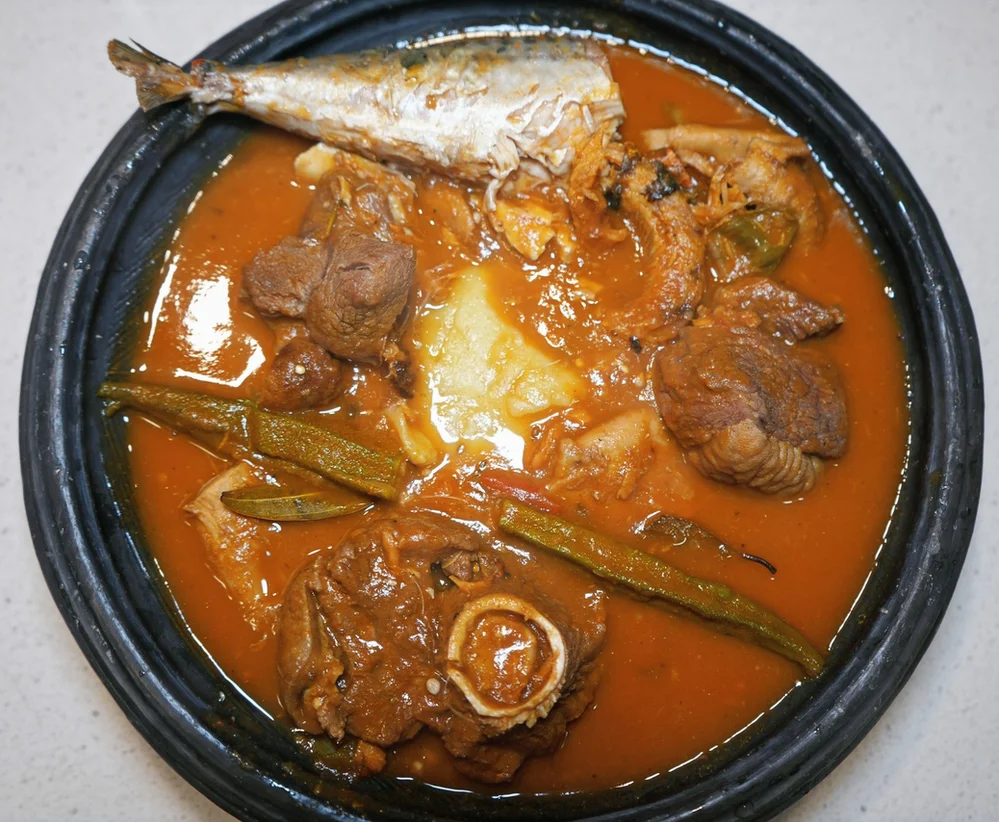
12. Fufu with Light Soup
Fufu is a smooth, stretchy dough made from pounded cassava or plantain, served as the starchy base for soups across West and Central Africa. Light soup, a peppery tomato-and-meat broth, is the classic partner that gets scooped up with each bite.
Yield: 4 servings | Prep: 15 minutes | Cook: 45 minutes
Ingredients:
- 4 cups fufu flour (cassava or plantain)
- 4 cups water (for fufu)
- 1 lb goat meat or beef, cubed
- 4 tomatoes, blended
- 1 onion, chopped
- 2 scotch bonnet peppers
- 2 tbsp ground crayfish
- Scent leaves or spinach
Method:
- Boil meat with onion and seasoning until tender, reserve broth.
- Add blended tomatoes, peppers, and crayfish to the broth, simmer 20 minutes.
- Whisk fufu flour into boiling water until smooth and stretchy.
- Add leaves to the soup, simmer 5 minutes.
- Serve fufu alongside hot soup.
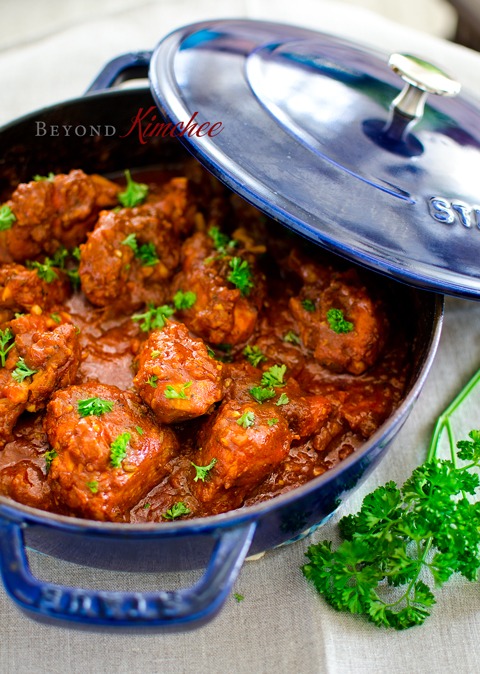
13. Cape Malay Chicken Curry
Cape Malay curry brings a gentler, fruitier heat than you’d expect, shaped by the Cape Malay community’s blend of Indonesian and Indian spice traditions in South Africa. A touch of apricot jam and cinnamon gives this chicken curry its signature sweet-savory balance.
Yield: 5 servings | Prep: 15 minutes | Cook: 45 minutes
Ingredients:
- 2 lbs chicken thighs
- 2 tbsp Cape Malay curry powder
- 1 onion, chopped
- 3 garlic cloves, minced
- 1 cinnamon stick
- 2 tbsp apricot jam
- 1 can coconut milk
- 2 potatoes, cubed
- 2 tbsp oil
Method:
- Sauté onion and garlic in oil until soft.
- Add curry powder and cinnamon stick, toast 1 minute.
- Add chicken, brown lightly.
- Stir in coconut milk, jam, and potatoes.
- Simmer 35 minutes until chicken is cooked through and sauce thickens.
14. Harira
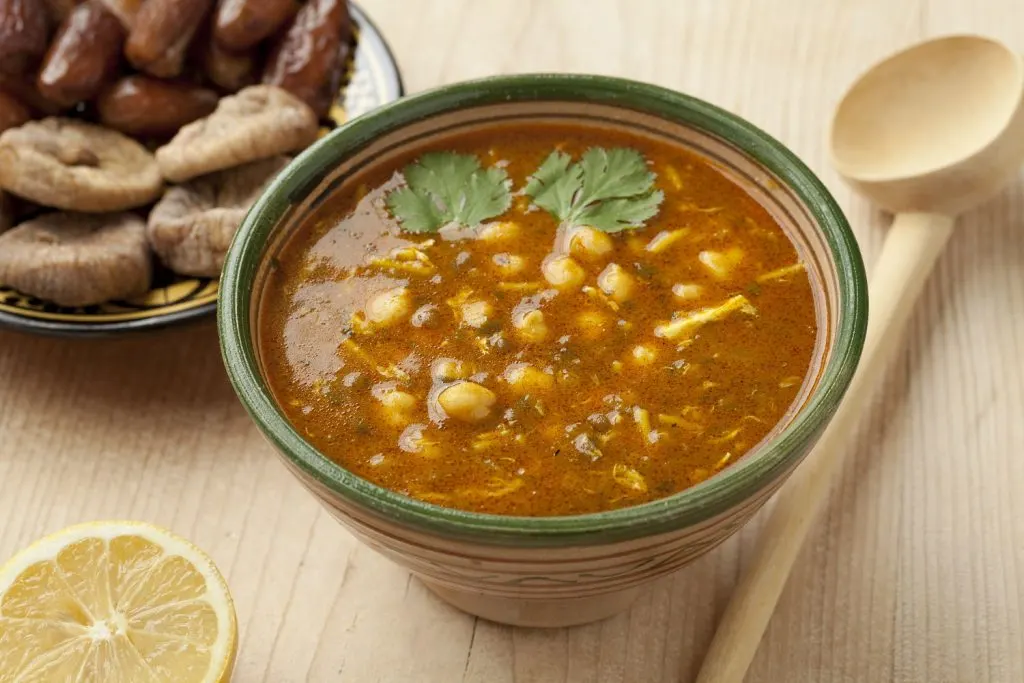
Harira is Morocco’s hearty soup of tomatoes, lentils, and chickpeas, traditionally served to break the fast during Ramadan but welcome at any table. A squeeze of lemon and fresh herbs at the end brighten the whole pot.
Yield: 6 servings | Prep: 15 minutes | Cook: 1 hour
Ingredients:
- 1 cup brown lentils
- 1 can chickpeas, drained
- 4 tomatoes, blended
- 1 onion, chopped
- 2 celery stalks, chopped
- 1/4 cup flour mixed with water (for thickening)
- 1 tsp cinnamon
- 1 tsp turmeric
- 6 cups water or stock
- Fresh cilantro and lemon wedges
Method:
- Sauté onion and celery until soft.
- Add tomatoes, lentils, chickpeas, and spices.
- Pour in water, simmer 40 minutes until lentils soften.
- Stir in flour slurry, cook 10 minutes to thicken.
- Finish with cilantro and lemon.
15. Matoke
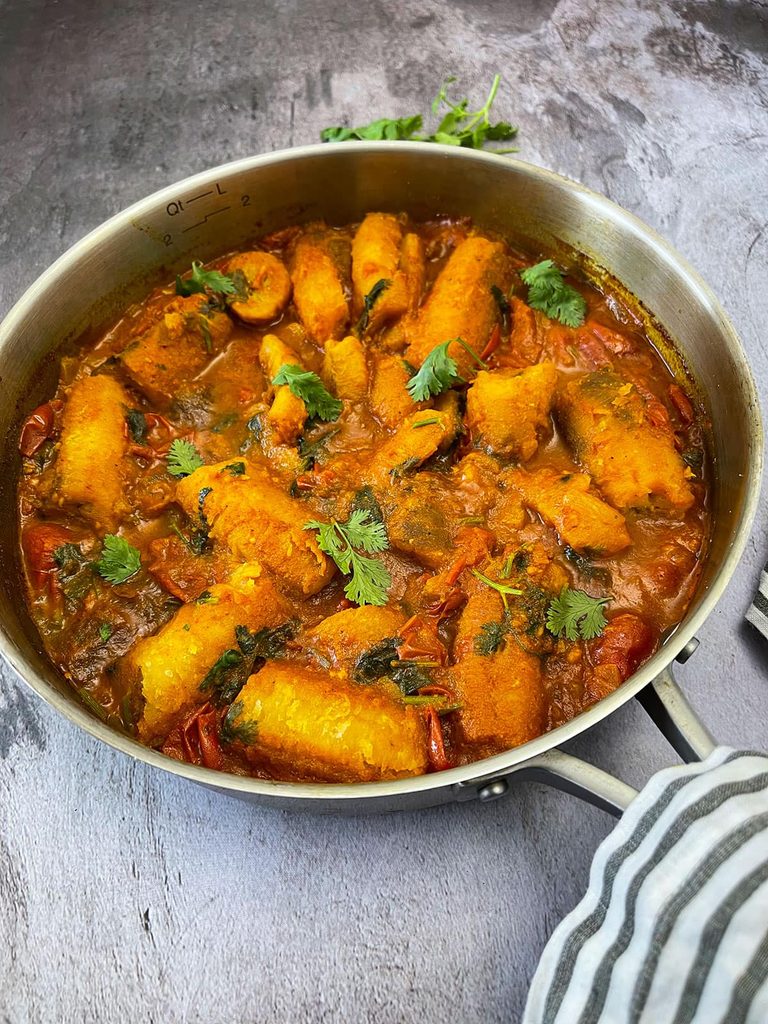
Matoke is East Africa’s green banana stew, a Ugandan staple where unripe plantains simmer until soft and savory, almost like a mash but with more texture. It’s a mild, comforting dish that pairs well with grilled meat or beans.
Yield: 4 servings | Prep: 20 minutes | Cook: 45 minutes
Ingredients:
- 10 green bananas (matoke), peeled
- 1 onion, chopped
- 2 tomatoes, chopped
- 1/4 cup oil
- 1 tsp curry powder
- 2 cups water or beef stock
- Salt to taste
Method:
- Wrap peeled matoke in banana leaves or foil, steam 30 minutes until soft.
- Sauté onion and tomatoes in oil until broken down.
- Add curry powder and stock, simmer 10 minutes.
- Mash steamed matoke lightly, fold into the sauce.
- Simmer 5 more minutes before serving.
16. Ugali with Sukuma Wiki
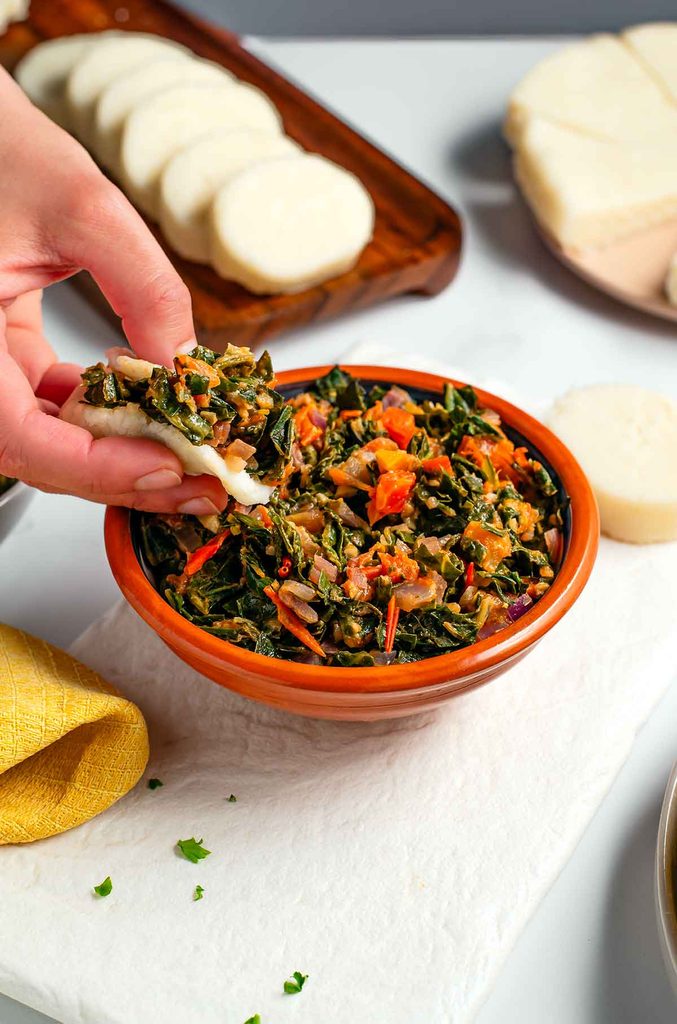
Ugali is East Africa’s everyday cornmeal staple, stirred into a dense, smooth dough that stands in for bread or rice at most meals. Sukuma wiki, sautéed collard greens, is the classic side that means “stretch the week” in Swahili.
Yield: 4 servings | Prep: 10 minutes | Cook: 25 minutes
Ingredients:
- 2 cups cornmeal
- 4 cups water
- 1 bunch collard greens, shredded
- 1 onion, sliced
- 2 tomatoes, chopped
- 2 tbsp oil
- Salt to taste
Method:
- Bring water to a boil, whisk in cornmeal gradually.
- Stir constantly over low heat 15 minutes until thick and smooth, forming a dough.
- Sauté onion and tomatoes in oil until soft.
- Add collard greens, cook 8 minutes until tender.
- Serve ugali alongside the greens.
17. Chakalaka
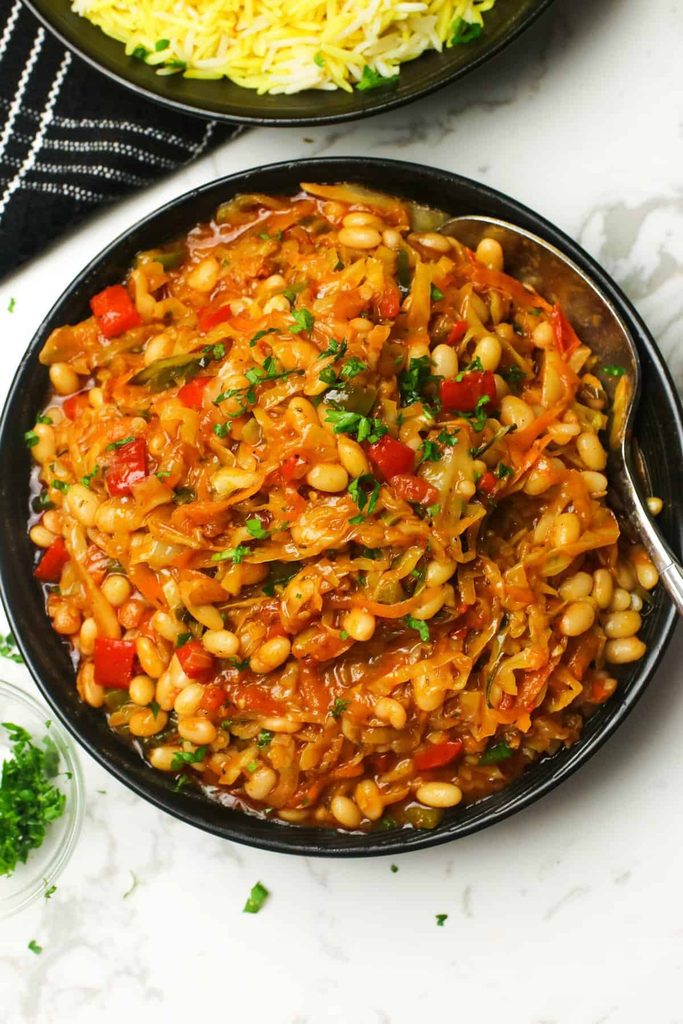
Chakalaka is a spicy South African vegetable relish, built on baked beans, carrots, and peppers simmered together until jammy. It’s the sidekick to braai (South African barbecue) that also works spooned over pap or bread.
Yield: 6 servings | Prep: 15 minutes | Cook: 25 minutes
Ingredients:
- 1 can baked beans
- 3 carrots, grated
- 1 red bell pepper, sliced
- 1 onion, chopped
- 2 tomatoes, chopped
- 2 tbsp curry powder
- 1 tsp chili flakes
- 2 tbsp oil
Method:
- Sauté onion and bell pepper in oil until soft.
- Add carrots, cook 5 minutes.
- Stir in tomatoes, curry powder, and chili flakes.
- Add baked beans, simmer 15 minutes until thickened.
18. Malva Pudding
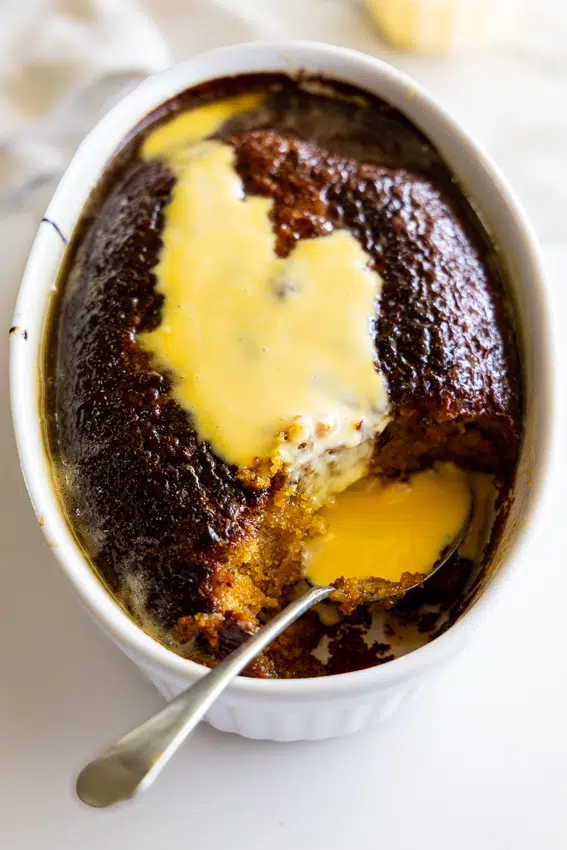
Malva pudding is South Africa’s beloved spongy dessert, baked with apricot jam and drenched in a warm cream sauce the moment it comes out of the oven. The texture lands somewhere between cake and bread pudding, soft and syrupy all the way through.
Yield: 8 servings | Prep: 15 minutes | Cook: 45 minutes at 350°F
Ingredients:
- 1 cup sugar
- 2 eggs
- 2 tbsp apricot jam
- 1 1/4 cups flour
- 1 tsp baking soda
- 1 tbsp butter, melted
- 1 cup milk
- For sauce: 1 cup cream, 1/2 cup sugar, 1/2 cup butter
Method:
- Beat sugar and eggs, mix in jam and melted butter.
- Fold in flour, baking soda, and milk.
- Pour into a greased baking dish, bake at 350°F for 45 minutes.
- Heat sauce ingredients until melted and smooth.
- Pour hot sauce over pudding right out of the oven.
19. Milk Tart
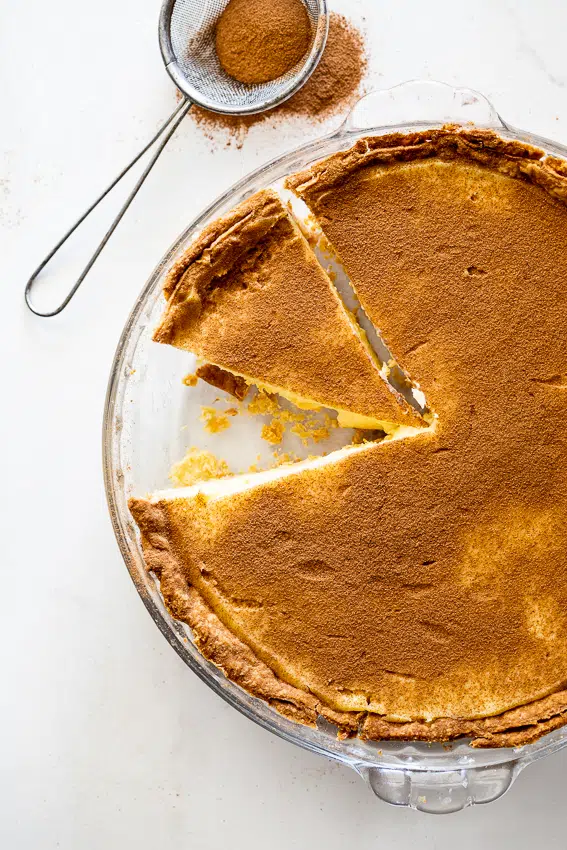
Milk tart, or melktert, is a South African classic with a delicate pastry shell and a silky custard filling dusted with cinnamon. It’s sliced thin, since the richness goes a long way in every bite.
Yield: 8 servings | Prep: 20 minutes | Cook: 40 minutes at 350°F
Ingredients:
- 1 pre-baked pie crust
- 3 cups milk
- 3 eggs
- 1/2 cup sugar
- 1/4 cup cornstarch
- 1 tsp vanilla extract
- Ground cinnamon for dusting
Method:
- Heat milk until just simmering.
- Whisk eggs, sugar, and cornstarch, temper with hot milk.
- Return to heat, stir until thickened into custard.
- Stir in vanilla, pour into crust.
- Bake at 350°F for 20 minutes until set, cool, dust with cinnamon.
Traditional Cooking Techniques and Regional Variations
African cooking relies on a handful of techniques passed down through generations rather than written recipes. Slow simmering builds depth in stews like doro wat and maafe, often over hours on low heat. Grinding and pounding, whether it’s cassava into fufu or melon seeds for egusi, gives dishes their signature texture.
Grilling over open flame defines dishes like suya, while steaming wrapped foods (matoke in banana leaves, some tamales-style dumplings) locks in moisture. Fermentation plays a starring role too, especially in Ethiopian injera, where teff batter sits for days to develop its tangy flavor.
Regional differences come down to climate and trade history. West African cooking leans on tomatoes, peppers, and palm oil, found in jollof rice and egusi soup. North African food draws on Mediterranean and Middle Eastern spice trade routes, showing up in tagines, couscous, and harira. East African dishes favor milder spicing and starchy staples like ugali and matoke. Southern African cuisine, shaped by Cape Malay and Dutch settler history, blends curry spices with European baking traditions in dishes like bobotie and milk tart.
If you want to go deeper into any single region, a collection of Ethiopian food recipes or Nigerian food recipes is a great next stop.
Vegetarian Options and Serving Pairings
Several dishes on this list are vegetarian as written, no substitutions needed. The Moroccan seven-vegetable couscous, harira, koshari, and chakalaka all skip meat entirely while still delivering real substance and spice.
A few more dishes adapt easily. Swap the meat in maafe for extra chickpeas and carrots, or make misir wot the star of an injera platter instead of a side. Ugali with sukuma wiki is naturally plant-based too, and ladling extra sauce over it keeps the dish satisfying.
For pairings, think about contrast. A tangy, spicy stew like doro wat benefits from something cool alongside it, like a simple cucumber salad. Rich dishes like bobotie or Cape Malay curry pair well with plain rice to balance the spice. Bread-based staples like injera and fufu do double duty as both side and utensil, so you won’t need much else on the table besides the stew itself.
If you’re building out a full spread, round things out with a lentil soup or a simple rice side dish to stretch the meal further.