Ethiopian cooking turns a handful of pantry staples into something that tastes like nowhere else. Berbere spice, niter kibbeh (spiced clarified butter), and a sour, spongy flatbread called injera build a whole cuisine around bold, layered flavor and communal eating off one big platter.
Doro Wat, Ethiopia’s beloved chicken stew simmered in berbere and butter, is the best starting point for first-time cooks because it teaches the core techniques behind nearly every other dish on this list. From there, vegetarian lentil stews, tangy salads, and griddled flatbreads round out a table that works for weeknights or a full spread for guests.
This roundup gathers the dishes worth learning first, from fiery stews to cooling sides, plus the ingredient swaps and serving tips that make the whole meal come together.
Quick picks:
- Best starting recipe: Doro Wat, the classic chicken stew every cook should master first
- Best vegetarian main: Misir Wat, a red lentil stew packed with berbere warmth
- Best for meal prep: Shiro Wat, a chickpea stew that comes together in one pot
- Best for guests: Kitfo, a seasoned raw beef dish served for special occasions
1. Injera
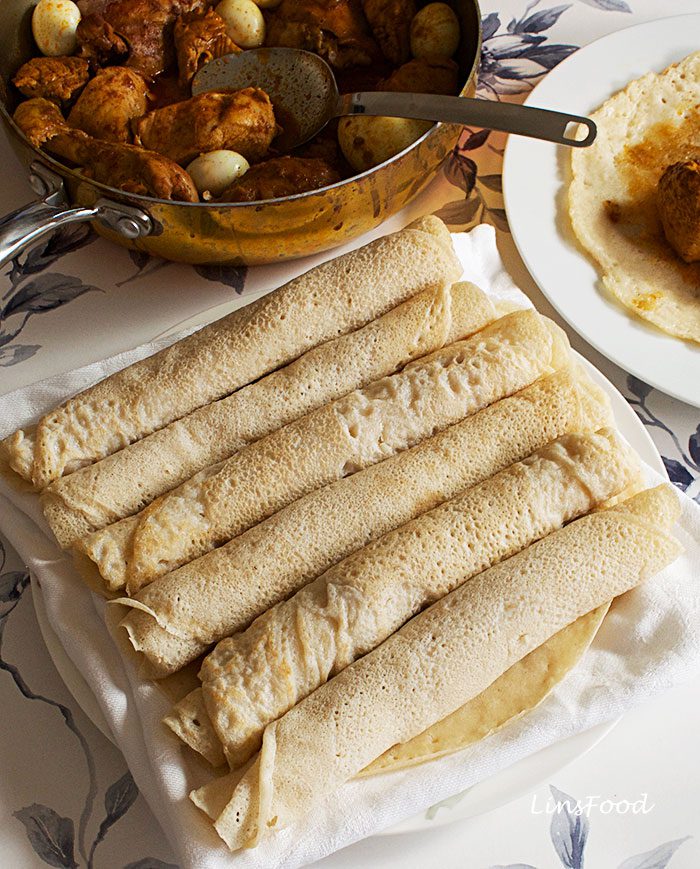
Injera is the spongy, slightly sour flatbread that serves as both plate and utensil in Ethiopian cooking. Made from teff flour fermented for a few days, it develops a tangy flavor and bubbly texture that soaks up stews beautifully. You tear off pieces with your hands to scoop up wats and salads.
Yield: 6 large flatbreads | Prep: 3 days (fermentation) | Cook: 20 minutes
Ingredients:
- 2 cups teff flour
- 2 1/2 cups water, plus more as needed
- 1/4 teaspoon active dry yeast (optional, speeds fermentation)
- 1/2 teaspoon salt
Method:
- Whisk teff flour, water, and yeast in a bowl until smooth.
- Cover loosely and let sit at room temperature for 2 to 3 days, stirring once daily, until bubbly and sour-smelling.
- Stir in salt and thin with water until the batter resembles heavy cream.
- Heat a nonstick skillet over medium heat. Pour in batter in a spiral, starting from the outside in.
- Cover and cook 2 to 3 minutes, until bubbles form and the top looks dry. Do not flip.
- Remove and cool on a clean towel. Repeat with remaining batter.
2. Doro Wat
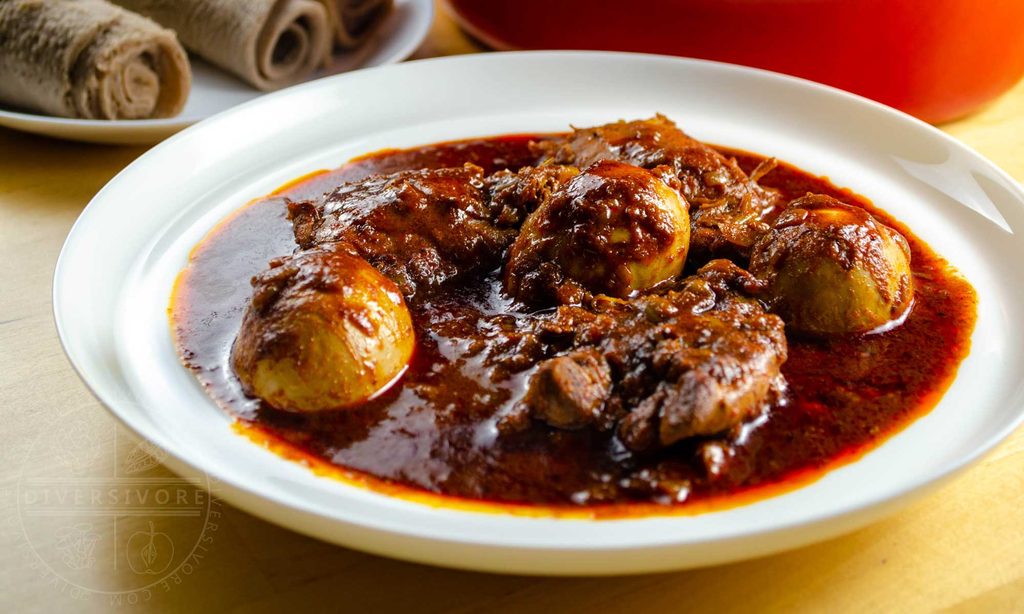
Doro Wat is Ethiopia’s signature chicken stew, built on a slow-cooked base of onions, berbere, and niter kibbeh. The sauce turns deep red and glossy, clinging to bone-in chicken and hard-boiled eggs. It takes patience, since the onions need real time to break down, but that’s where the flavor comes from.
Yield: 4 servings | Prep: 20 minutes | Cook: 1 hour 15 minutes
Ingredients:
- 4 cups finely chopped red onion
- 1/2 cup niter kibbeh (spiced clarified butter)
- 1/3 cup berbere spice
- 4 cloves garlic, minced
- 1 tablespoon grated ginger
- 2 cups chicken broth
- 2 lbs bone-in chicken thighs and drumsticks
- 4 hard-boiled eggs, peeled
- Salt to taste
Method:
- Cook onions in a dry pot over medium heat, stirring often, for 15 minutes until softened.
- Add niter kibbeh and cook 5 minutes more.
- Stir in berbere, garlic, and ginger. Cook 5 minutes until fragrant.
- Add broth and bring to a simmer. Add chicken, cover, and simmer 35 minutes.
- Add eggs and simmer uncovered 10 minutes, until sauce thickens. Season with salt.
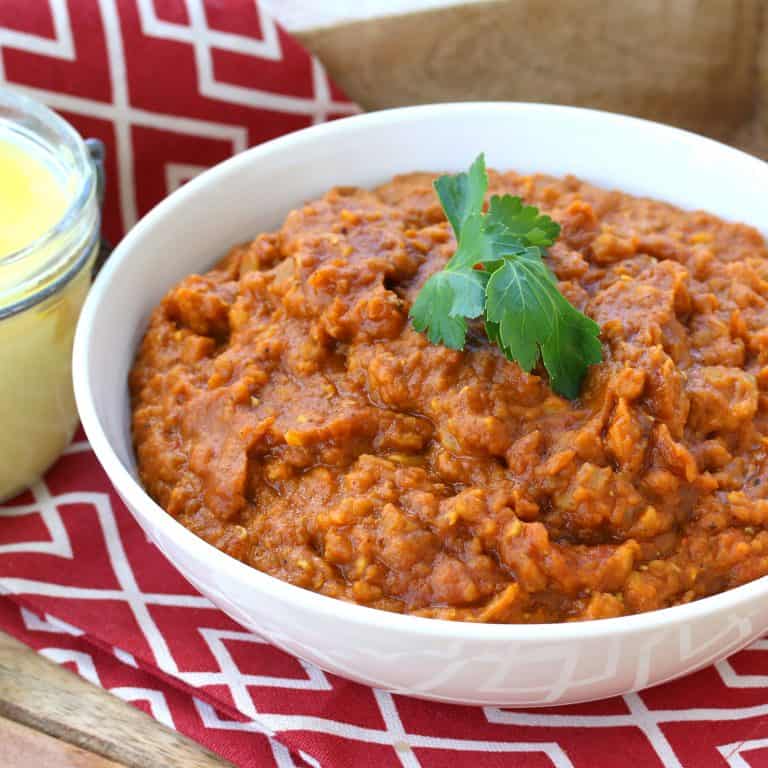
3. Misir Wat
Misir Wat is a red lentil stew that proves vegetarian food can carry just as much heat and depth as a meat dish. The lentils break down into a thick, rust-colored stew seasoned with berbere and simmered onions. It’s a staple on every injera platter and freezes well for later.
Yield: 4 servings | Prep: 10 minutes | Cook: 35 minutes
Ingredients:
- 1 cup red lentils, rinsed
- 2 tablespoons niter kibbeh or vegetable oil
- 1 1/2 cups chopped red onion
- 3 tablespoons berbere spice
- 2 cloves garlic, minced
- 3 cups water
- Salt to taste
Method:
- Cook onion in niter kibbeh over medium heat for 10 minutes until soft.
- Stir in berbere and garlic, cooking 2 minutes.
- Add lentils and water. Bring to a boil, then reduce heat.
- Simmer uncovered 20 to 25 minutes, stirring occasionally, until thick. Season with salt.

4. Shiro Wat
Shiro Wat is a smooth, nutty stew made from ground chickpea or broad bean flour, and it’s one of the fastest Ethiopian dishes to pull together. The powder cooks into a thick, almost velvety sauce flavored with berbere and garlic. Many Ethiopian households make this one on short notice because it needs no long simmer.
Yield: 4 servings | Prep: 5 minutes | Cook: 20 minutes
Ingredients:
- 1 cup shiro powder (ground chickpea flour blend)
- 3 cups water
- 1/4 cup niter kibbeh or oil
- 1 cup chopped red onion
- 2 cloves garlic, minced
- 1 tablespoon berbere spice
- 1 tomato, diced
- Salt to taste
Method:
- Whisk shiro powder into water until smooth and lump-free.
- Cook onion in niter kibbeh over medium heat 8 minutes until soft.
- Add garlic, berbere, and tomato. Cook 5 minutes.
- Pour in shiro mixture, stirring constantly. Simmer 10 minutes until thick. Season with salt.
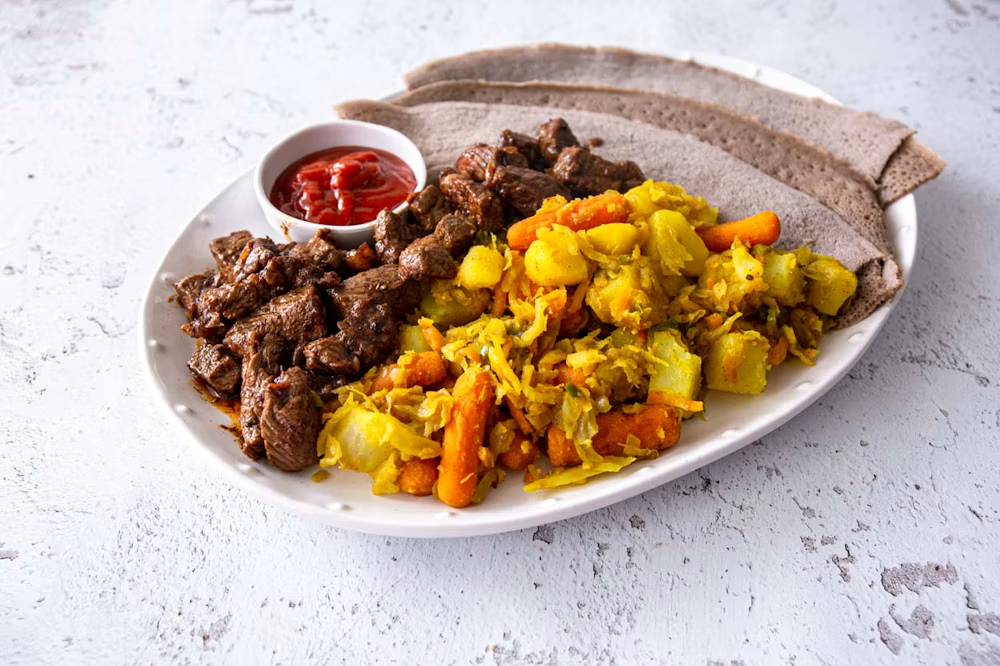
5. Beef Tibs
Beef Tibs are pan-seared cubes of beef cooked fast and hot with onions, peppers, and rosemary. Unlike the long-simmered wats, this dish comes together in under 20 minutes and has a charred, savory edge. Jalapeños and garlic give it a sharp kick that pairs well with cooling sides. If you like working with beef cubes, this recipe sits well alongside other beef cube recipes for quick weeknight cooking.
Yield: 4 servings | Prep: 15 minutes | Cook: 15 minutes
Ingredients:
- 1 1/2 lbs beef sirloin, cubed
- 3 tablespoons niter kibbeh
- 1 red onion, sliced
- 2 jalapeños, sliced
- 3 cloves garlic, minced
- 1 teaspoon rosemary
- 1 teaspoon berbere spice
- Salt and pepper to taste
Method:
- Heat niter kibbeh in a large skillet over high heat.
- Add beef and sear 4 to 5 minutes, until browned.
- Add onion, jalapeños, and garlic. Cook 5 minutes.
- Stir in rosemary and berbere. Cook 2 more minutes. Season and serve hot.
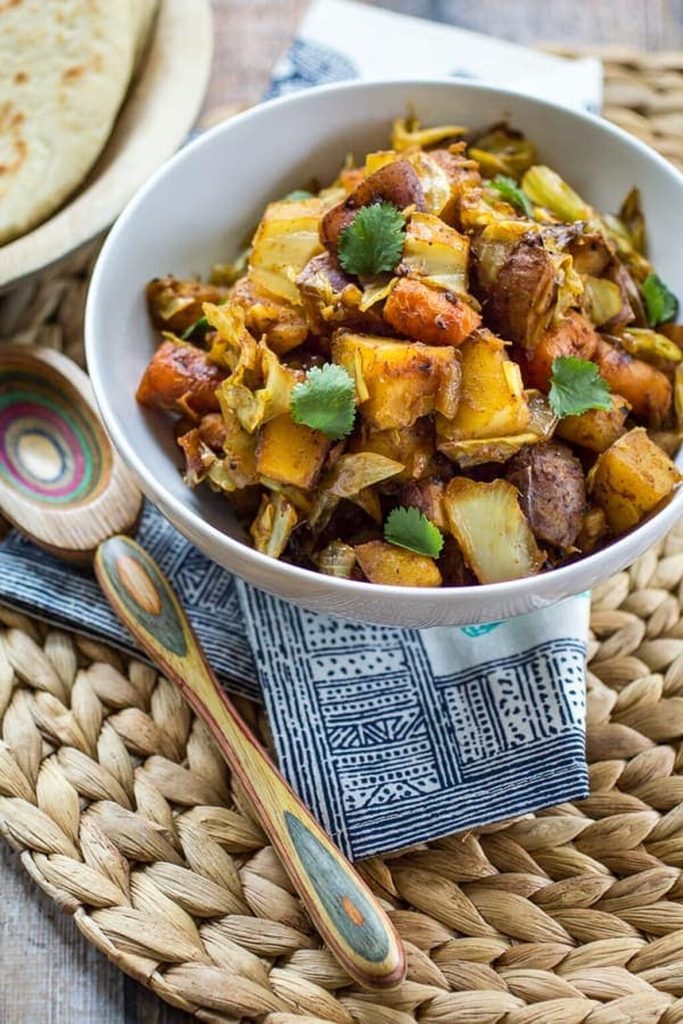
6. Atakilt Wat
Atakilt Wat is a gently spiced cabbage, carrot, and potato side dish that cools down a spicy platter. Turmeric gives it a warm golden color, while the vegetables stay tender but not mushy. It’s one of the easiest Ethiopian dishes to make for a crowd, since it scales up without much extra work.
Yield: 6 servings | Prep: 15 minutes | Cook: 25 minutes
Ingredients:
- 1/4 cup vegetable oil
- 1 onion, sliced
- 2 potatoes, cubed
- 2 carrots, sliced
- 1/2 head green cabbage, sliced
- 1 teaspoon turmeric
- 1 teaspoon grated ginger
- Salt and pepper to taste
Method:
- Heat oil in a large pot over medium heat. Cook onion 5 minutes.
- Add potatoes and carrots. Cook 10 minutes, stirring occasionally.
- Stir in turmeric and ginger. Add cabbage and cook 10 minutes until tender.
- Season with salt and pepper before serving.
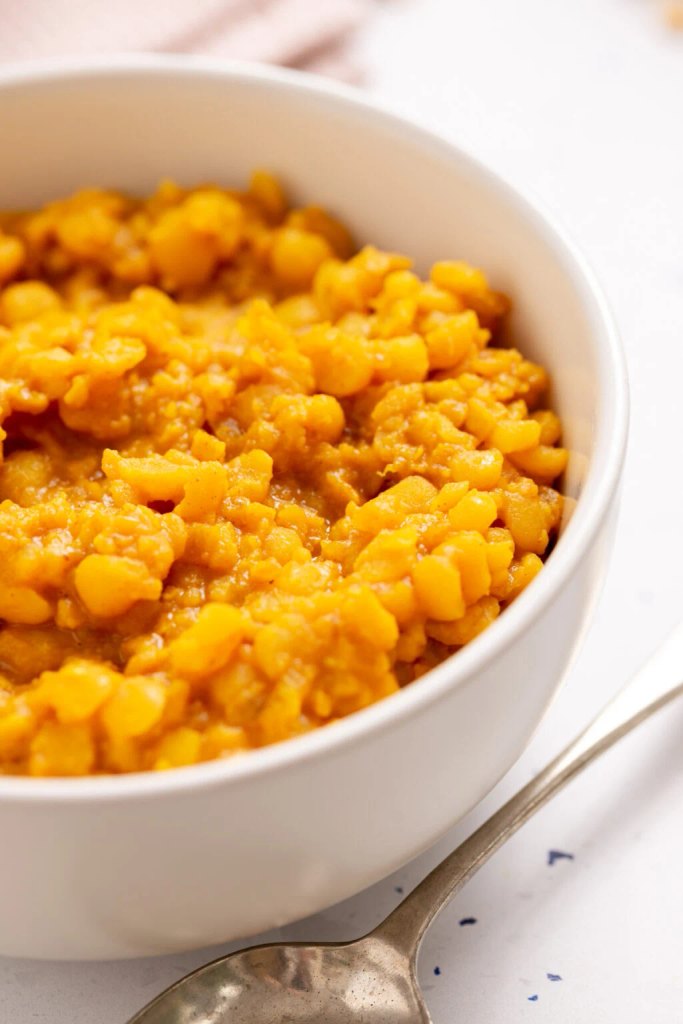
7. Kik Alicha
Kik Alicha is a mild, golden split pea stew that gives your taste buds a break from berbere-heavy dishes. Turmeric and ginger carry the flavor instead of chili, making it a gentle option for kids or anyone new to Ethiopian food. It cooks down soft and creamy, almost like a thick soup.
Yield: 4 servings | Prep: 10 minutes | Cook: 30 minutes
Ingredients:
- 1 cup yellow split peas, rinsed
- 3 cups water
- 2 tablespoons niter kibbeh or oil
- 1 onion, chopped
- 2 cloves garlic, minced
- 1 teaspoon turmeric
- 1/2 teaspoon grated ginger
- Salt to taste
Method:
- Cook onion in niter kibbeh over medium heat 8 minutes until soft.
- Add garlic, turmeric, and ginger. Cook 2 minutes.
- Add split peas and water. Bring to a boil, then simmer 25 minutes until soft.
- Mash lightly with a spoon and season with salt.
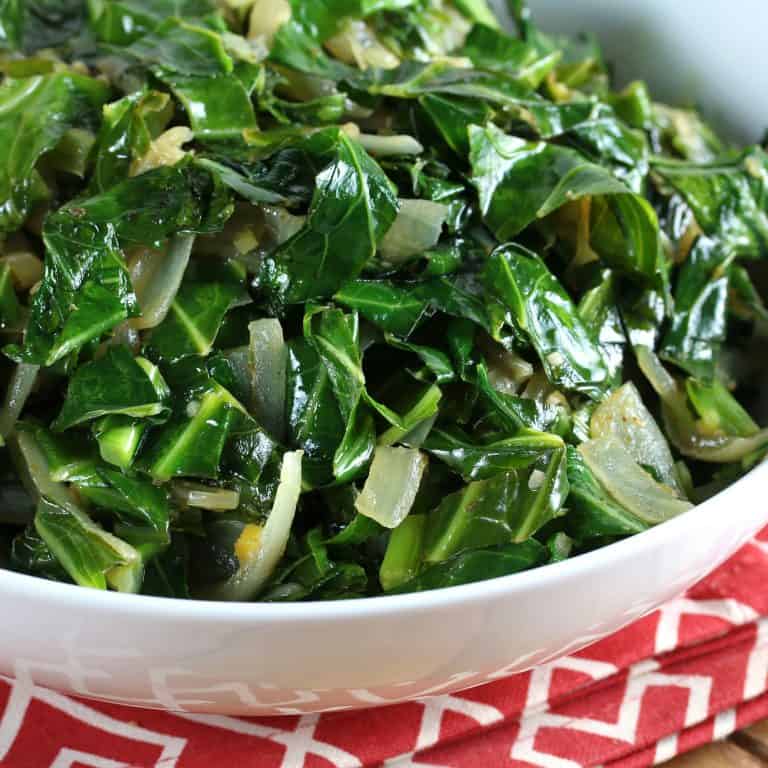
8. Gomen
Gomen is a simple collard greens dish simmered down with onion, garlic, and a touch of ginger until silky and mild. It leans on good technique instead of heavy spice, letting the greens’ natural sweetness come through. This is the dish to reach for when the rest of your platter runs spicy.
Yield: 4 servings | Prep: 15 minutes | Cook: 25 minutes
Ingredients:
- 2 bunches collard greens, stemmed and chopped
- 3 tablespoons niter kibbeh or oil
- 1 onion, chopped
- 2 cloves garlic, minced
- 1/2 teaspoon grated ginger
- Salt to taste
Method:
- Blanch collard greens in boiling water 3 minutes, then drain.
- Cook onion in niter kibbeh over medium heat 8 minutes.
- Add garlic and ginger, cooking 2 minutes.
- Stir in collards and cook 10 minutes until tender. Season with salt.
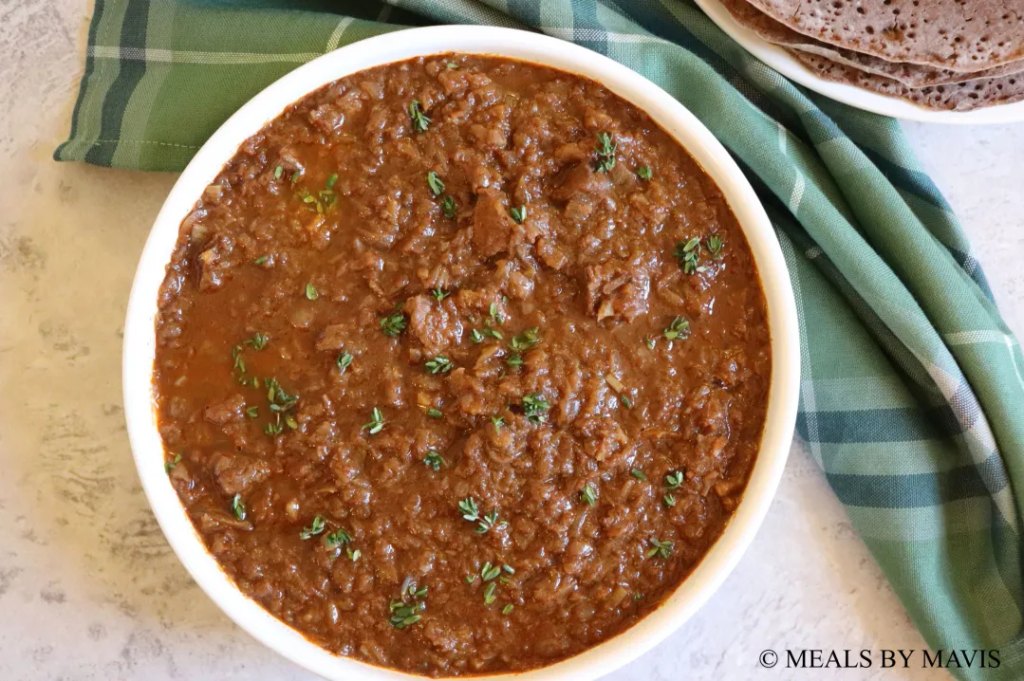
9. Sega Wat
Sega Wat is a rich beef stew built the same way as Doro Wat, with berbere and slow-cooked onions carrying most of the flavor. Chunks of beef simmer until fork-tender in a thick red sauce. It’s a heartier choice for cold evenings and pairs naturally with injera or rice.
Yield: 4 servings | Prep: 15 minutes | Cook: 1 hour 30 minutes
Ingredients:
- 2 lbs beef stew meat, cubed
- 3 cups chopped red onion
- 1/3 cup niter kibbeh
- 1/4 cup berbere spice
- 3 cloves garlic, minced
- 1 tablespoon grated ginger
- 2 cups beef broth
- Salt to taste
Method:
- Cook onions in a dry pot over medium heat 15 minutes until softened.
- Stir in niter kibbeh, cooking 5 minutes.
- Add berbere, garlic, and ginger. Cook 5 minutes.
- Add beef and broth. Cover and simmer 1 hour until tender. Season with salt.
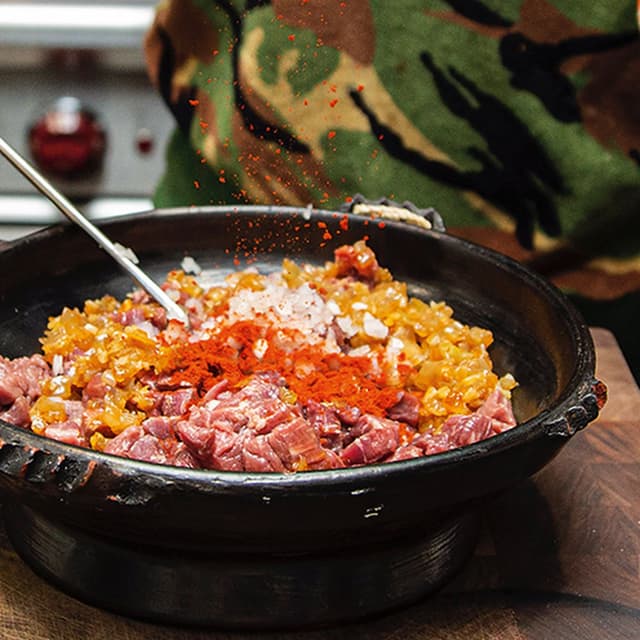
10. Kitfo
Kitfo is seasoned raw beef mixed with warm spiced butter and mitmita, a fiery Ethiopian chili blend. Traditionally served rare, it has a buttery, peppery flavor that fans of steak tartare will recognize instantly. Use the freshest, highest-quality beef you can find, since it’s served uncooked.
Yield: 4 servings | Prep: 20 minutes | Cook: 5 minutes
Ingredients:
- 1 lb beef tenderloin, finely minced
- 1/3 cup niter kibbeh, warmed
- 1 1/2 tablespoons mitmita spice
- 1/2 teaspoon ground cardamom
- Salt to taste
- Ayib and injera for serving
Method:
- Warm niter kibbeh gently until liquid, then cool slightly.
- Mix minced beef with mitmita, cardamom, and salt.
- Fold in warm niter kibbeh until evenly coated.
- Serve immediately with ayib and injera.
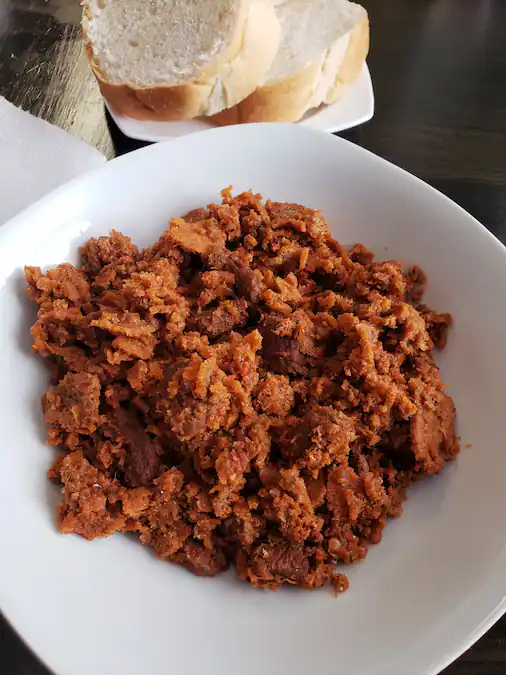
11. Firfir
Firfir turns leftover injera into a quick, satisfying breakfast by tearing it up and tossing it in a berbere-spiced sauce. It’s the Ethiopian answer to using up stale bread, and it tastes even better the next day. Some cooks add shredded beef for a heartier version.
Yield: 2 servings | Prep: 5 minutes | Cook: 15 minutes
Ingredients:
- 3 pieces injera, torn into strips
- 2 tablespoons niter kibbeh
- 1/2 onion, chopped
- 2 tablespoons berbere spice
- 1 cup water or broth
- Salt to taste
Method:
- Cook onion in niter kibbeh over medium heat 5 minutes.
- Stir in berbere and water, simmering 5 minutes.
- Add torn injera and toss to coat, cooking 5 minutes until warmed through.
- Season with salt and serve warm.
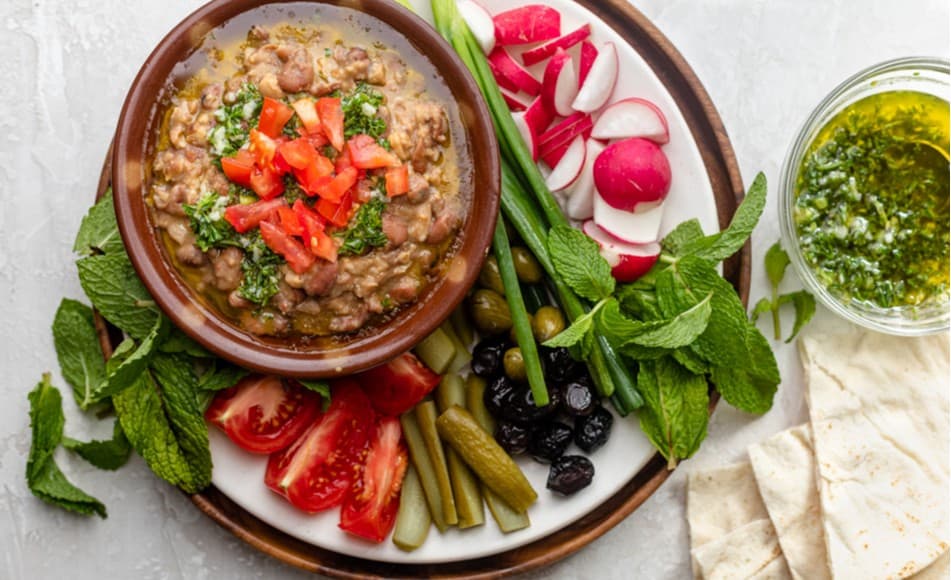
12. Ful Medames
Ful Medames is a warm fava bean dish with roots across North Africa and the Horn of Africa, mashed lightly and dressed with olive oil, lemon, and chopped tomato. It’s a filling breakfast or light lunch that tastes fresh and a little tangy. Serve it with bread for scooping.
Yield: 4 servings | Prep: 10 minutes | Cook: 15 minutes
Ingredients:
- 2 cans (15 oz each) fava beans, drained
- 2 tablespoons olive oil
- 2 cloves garlic, minced
- 1 tomato, diced
- Juice of 1 lemon
- Salt and pepper to taste
Method:
- Heat fava beans in a saucepan with a splash of water over medium heat 10 minutes.
- Mash beans lightly with a fork, leaving some texture.
- Stir in garlic, olive oil, and lemon juice.
- Top with diced tomato and season with salt and pepper.

13. Ethiopian Sambusa
Ethiopian Sambusa are crisp, triangle-shaped pastries filled with spiced lentils or ground beef, fried until golden. They make a great starter for a larger Ethiopian spread or a snack on their own. The filling carries berbere’s warmth without overwhelming the thin, crunchy shell.
Yield: 16 sambusas | Prep: 30 minutes | Cook: 15 minutes
Ingredients:
- 16 spring roll wrappers
- 1 cup cooked red lentils or seasoned ground beef
- 1/2 onion, finely chopped
- 1 tablespoon berbere spice
- 1 clove garlic, minced
- Oil for frying
Method:
- Cook onion and garlic in a splash of oil 5 minutes. Stir in berbere and lentils or beef. Cool slightly.
- Place a spoonful of filling on each wrapper and fold into a triangle, sealing edges with water.
- Heat oil to 350°F and fry sambusas 3 to 4 minutes per side until golden.
- Drain on paper towels before serving.
14. Azifa
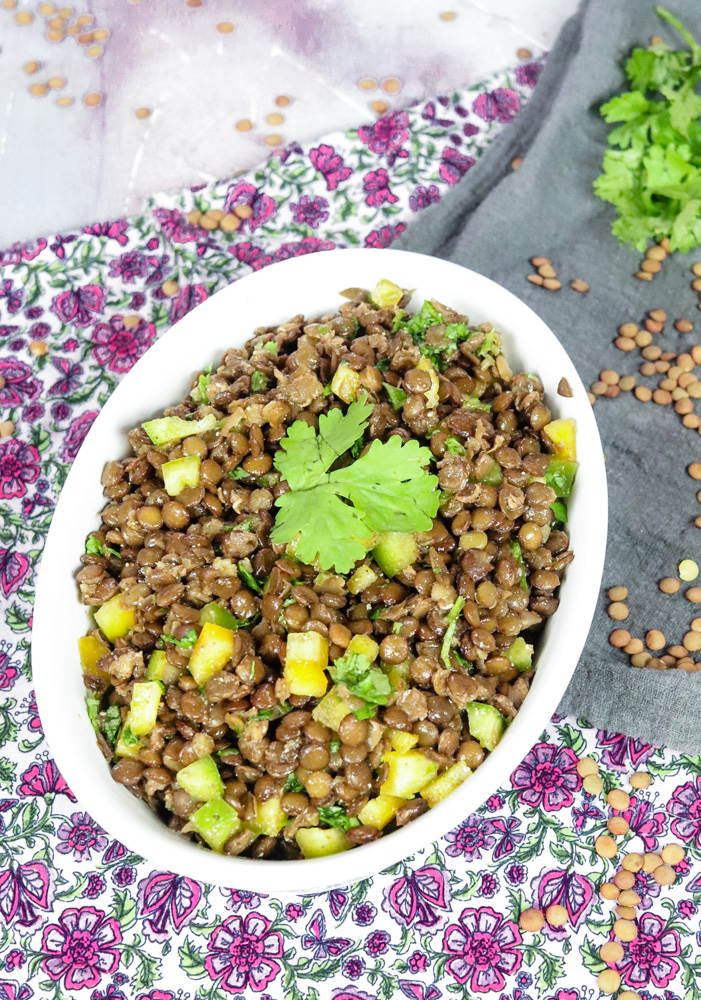
Azifa is a cold green lentil salad dressed with mustard, lemon, and jalapeño, making it one of the brightest dishes on an Ethiopian table. It’s often served during fasting periods but works any time you want something fresh and tangy next to a rich stew.
Yield: 4 servings | Prep: 15 minutes | Cook: 20 minutes
Ingredients:
- 1 cup green lentils, rinsed
- 2 cups water
- 2 tablespoons olive oil
- 1 tablespoon lemon juice
- 1 teaspoon ground mustard
- 1 jalapeño, finely chopped
- 1/2 red onion, finely diced
- Salt to taste
Method:
- Simmer lentils in water 20 minutes until tender but not mushy. Drain and cool.
- Whisk olive oil, lemon juice, and mustard together.
- Toss lentils with dressing, jalapeño, and onion.
- Season with salt and chill before serving.
15. Ayib
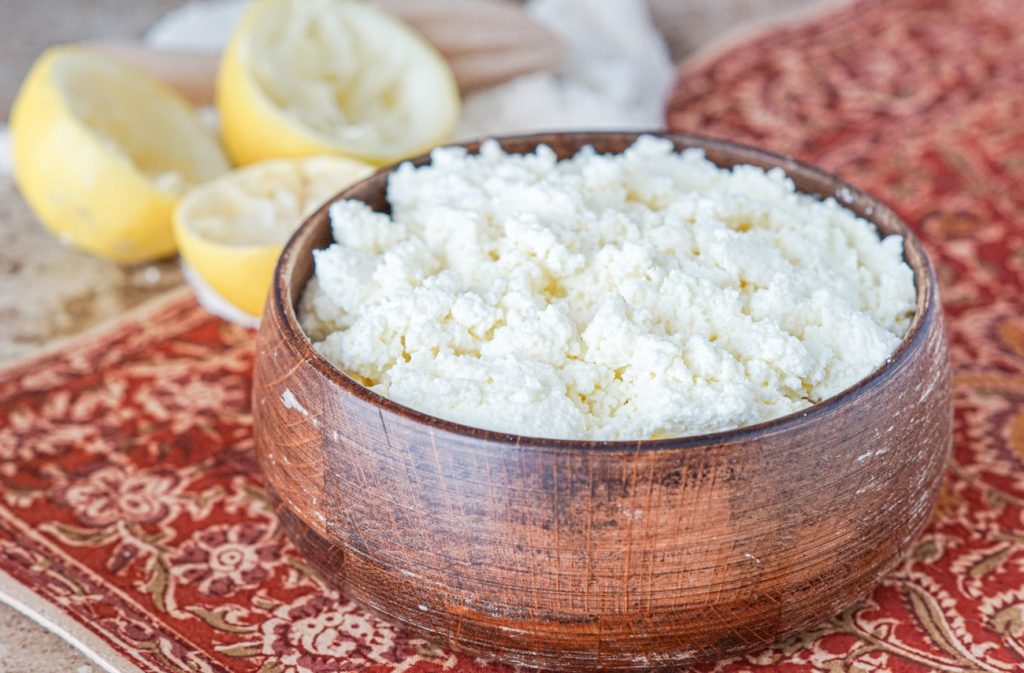
Ayib is a mild, crumbly Ethiopian cheese similar to cottage cheese, often served alongside spicy stews to cool the palate. It takes only two ingredients and a little patience, since the milk needs time to curdle naturally. Serve it plain or mixed with herbs.
Yield: About 1 cup | Prep: 10 minutes | Cook: 4 hours (resting)
Ingredients:
- 4 cups whole milk
- 2 tablespoons lemon juice or plain yogurt
Method:
- Warm milk gently over low heat until just below boiling.
- Stir in lemon juice and remove from heat. Let sit 10 minutes until curds form.
- Strain through cheesecloth and let rest 4 hours at room temperature.
- Refrigerate and use within 3 days.
16. Chechebsa
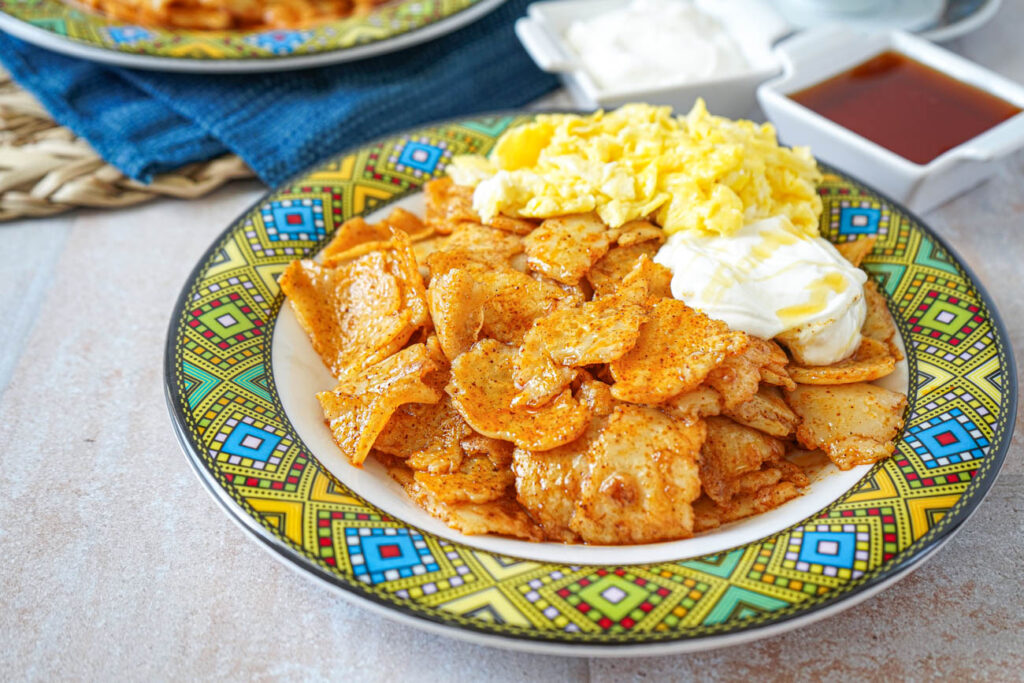
Chechebsa is a warm, spiced flatbread dish, sometimes called Ethiopian breakfast pancakes, torn up and tossed in berbere butter. It’s quick, comforting, and a little different from injera since the bread itself gets pan-fried first. Many families serve it with coffee in the morning.
Yield: 2 servings | Prep: 10 minutes | Cook: 15 minutes
Ingredients:
- 2 pieces flatbread or pita, torn into pieces
- 3 tablespoons niter kibbeh
- 1 tablespoon berbere spice
- Salt to taste
Method:
- Melt niter kibbeh in a skillet over medium heat.
- Stir in berbere, cooking 1 minute until fragrant.
- Add torn bread pieces, tossing to coat evenly.
- Cook 5 minutes, stirring often, until warmed through. Season with salt.
17. Genfo
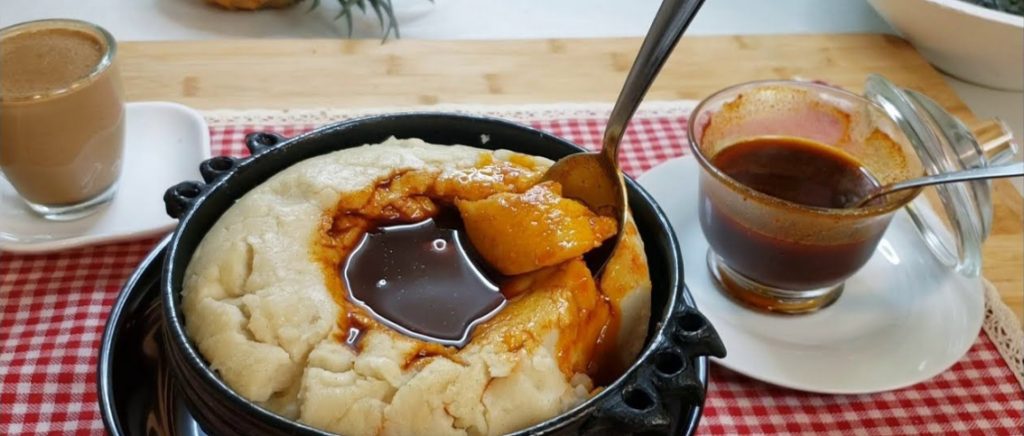
Genfo is a thick, smooth porridge made from barley or wheat flour, served in a mound with a well of spiced butter in the center. It’s hearty, warming, and traditionally eaten for breakfast or when someone needs a little extra comfort. Scoop it with a spoon, dragging each bite through the melted butter.
Yield: 4 servings | Prep: 5 minutes | Cook: 20 minutes
Ingredients:
- 1 cup barley or wheat flour
- 3 cups water
- 1/4 cup niter kibbeh
- 1 teaspoon berbere spice
- Salt to taste
Method:
- Bring water to a boil and whisk in flour gradually to avoid lumps.
- Reduce heat and stir constantly 15 minutes until thick and smooth.
- Mound porridge onto a plate, pressing a well into the center.
- Melt niter kibbeh with berbere and pour into the well. Serve warm.
18. Asa Wat
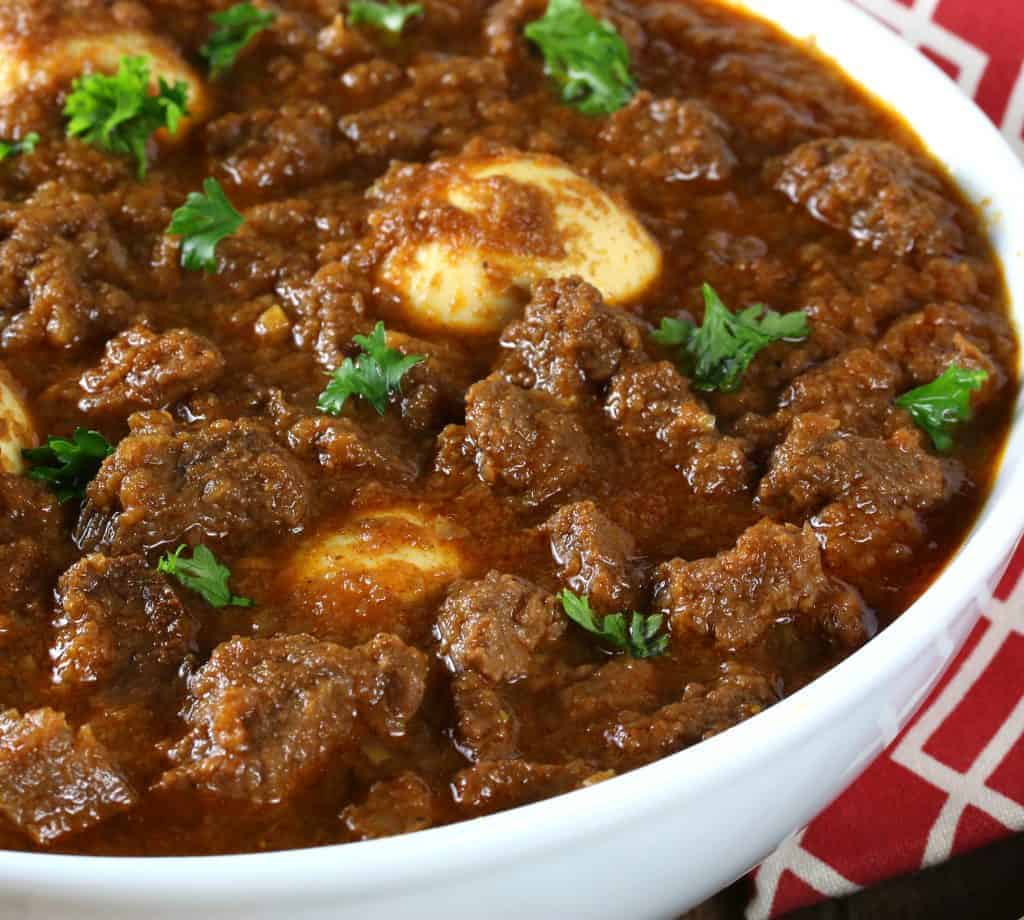
Asa Wat is a spicy fish stew made with firm white fish simmered in a berbere-based sauce, popular during fasting periods when meat is off the table. The fish stays tender if you add it near the end of cooking. It’s a lighter alternative to the heavier meat wats.
Yield: 4 servings | Prep: 15 minutes | Cook: 30 minutes
Ingredients:
- 1 1/2 lbs firm white fish fillets, cubed
- 2 cups chopped red onion
- 1/4 cup oil
- 1/4 cup berbere spice
- 2 cloves garlic, minced
- 1 cup water or fish broth
- Salt to taste
Method:
- Cook onion in oil over medium heat 15 minutes until soft.
- Stir in berbere and garlic, cooking 5 minutes.
- Add water and simmer 5 minutes.
- Add fish and simmer gently 8 to 10 minutes until cooked through. Season with salt.
19. Himbasha
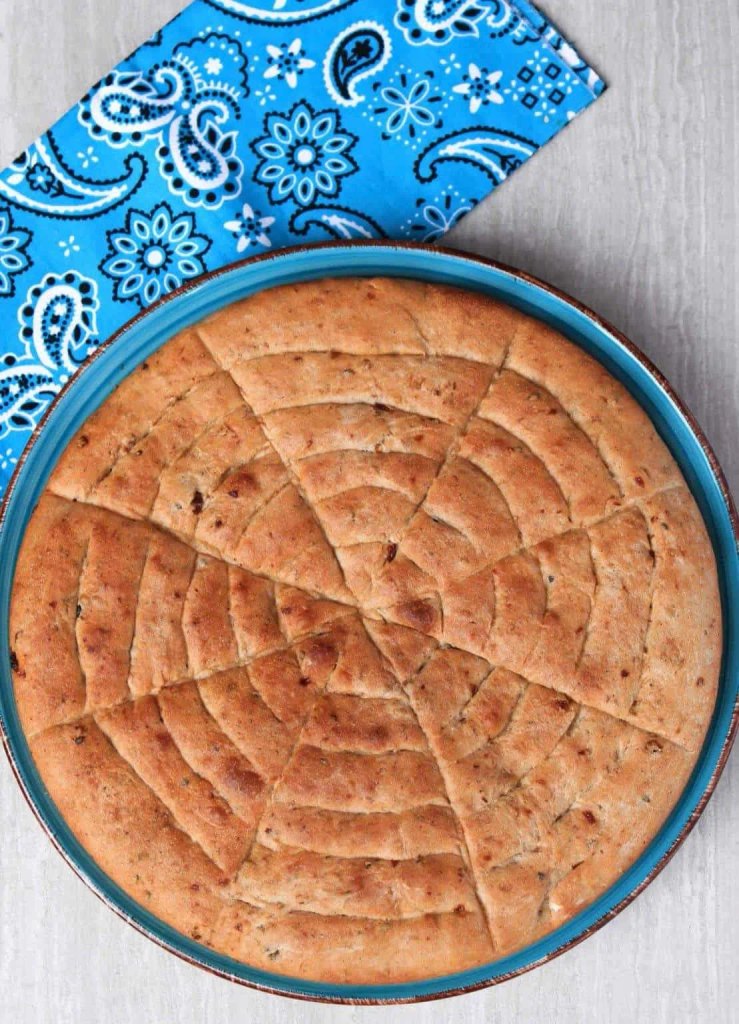
Himbasha is a lightly sweet, cardamom-scented celebration bread with a soft crumb and a pretty scored top. It shows up at birthdays, holidays, and gatherings, often studded with raisins. The dough is forgiving, which makes it a good one for bakers still building confidence.
Yield: 1 loaf | Prep: 2 hours (with rising) | Cook: 30 minutes
Ingredients:
- 3 1/2 cups all-purpose flour
- 1/4 cup sugar
- 1 packet (2 1/4 tsp) active dry yeast
- 1 teaspoon ground cardamom
- 1 cup warm milk
- 1/4 cup melted butter
- 1 egg
- 1/2 teaspoon salt
- 1/2 cup raisins
Method:
- Mix warm milk, yeast, and a pinch of sugar. Let sit 10 minutes until foamy.
- Combine flour, remaining sugar, cardamom, and salt in a large bowl.
- Add yeast mixture, melted butter, and egg. Knead 8 minutes until smooth. Fold in raisins.
- Cover and let rise 1 hour until doubled.
- Shape into a round loaf, score a pattern on top, and let rise 30 minutes more.
- Bake at 350°F for 30 minutes until golden. Cool before slicing.
Essential Ethiopian Ingredients and Substitutions
Berbere spice blend, niter kibbeh, and teff flour form the backbone of Ethiopian cooking, and stocking them makes every recipe above easier to pull off. Berbere combines chili, garlic, ginger, and warm spices like fenugreek and cardamom into one jar, so you only need the one blend for most stews.
Niter kibbeh is clarified butter infused with spices like cardamom and fenugreek. Regular ghee works in a pinch, though you’ll lose some of the floral depth. Teff flour for injera can be found at most well-stocked grocery stores or ordered online; a mix of teff and all-purpose flour speeds up fermentation if you’re short on time.
Mitmita, the fiery chili blend used in Kitfo, can be swapped with a mix of cayenne and a pinch of cardamom if you can’t find it locally. Shiro powder is harder to substitute since it’s a specific chickpea-based blend, so it’s worth seeking out at an African or Middle Eastern grocer.
If you enjoy building a pantry around bold, spice-forward cooking, the same instincts apply across other traditional African food recipes and even Nigerian food recipes, many of which share similar chili and onion bases.
How to Build an Ethiopian Meal
A proper Ethiopian meal starts with a large piece of injera spread across a communal tray, topped with small mounds of two or three stews. Guests tear off pieces of extra injera on the side to scoop up each bite, so always set out more bread than you think you need.
Balance is the goal. Pair a rich, spicy stew like Doro Wat or Sega Wat with a mild side like Kik Alicha or Gomen, then add something bright, like Azifa, to cut through the richness. A scoop of Ayib cools down the heat between bites.
For a smaller gathering, two stews and one vegetable side cover the basics. For a bigger spread, aim for four or five dishes arranged around the tray so every color and flavor shows up in one glance. Coffee, often prepared in a traditional ceremony, typically follows the meal rather than starting it.
If you’re planning a wider international spread, dishes like these sit comfortably next to Turkish recipes or a table of Latin food recipes, since both lean on shared platters and bold, communal eating.