Hawaiian food carries the island’s whole story in every bite: Polynesian roots, plantation-era immigrants, and a genuine love of sharing a big plate with family. From smoky kalua pork pulled straight from an underground imu to a cold scoop of macaroni salad sitting next to your rice, these dishes feel like a backyard party even when you’re cooking for two.
The recipes ahead cover the real backbone of island cooking, the kind you’d find at a plate lunch counter or a family luau, not just the fruity drinks and pineapple garnishes mainland menus tend to lean on. Some take a slow afternoon, others come together in twenty minutes on a weeknight.
Kalua pork, with its smoky shredded texture and salty depth, stands out as the dish most people picture first when they think of Hawaiian cooking, and it’s achievable at home with a slow cooker or oven instead of a backyard pit.
Quick picks:
- Best for beginners: Hawaiian Macaroni Salad, no cooking skills required
- Best for a crowd: Kalua Pork, feeds a party with leftovers to spare
- Best for a quick dinner: Huli Huli Chicken, grills up in under 30 minutes
- Best for dessert lovers: Butter Mochi, chewy, sweet, and hard to mess up
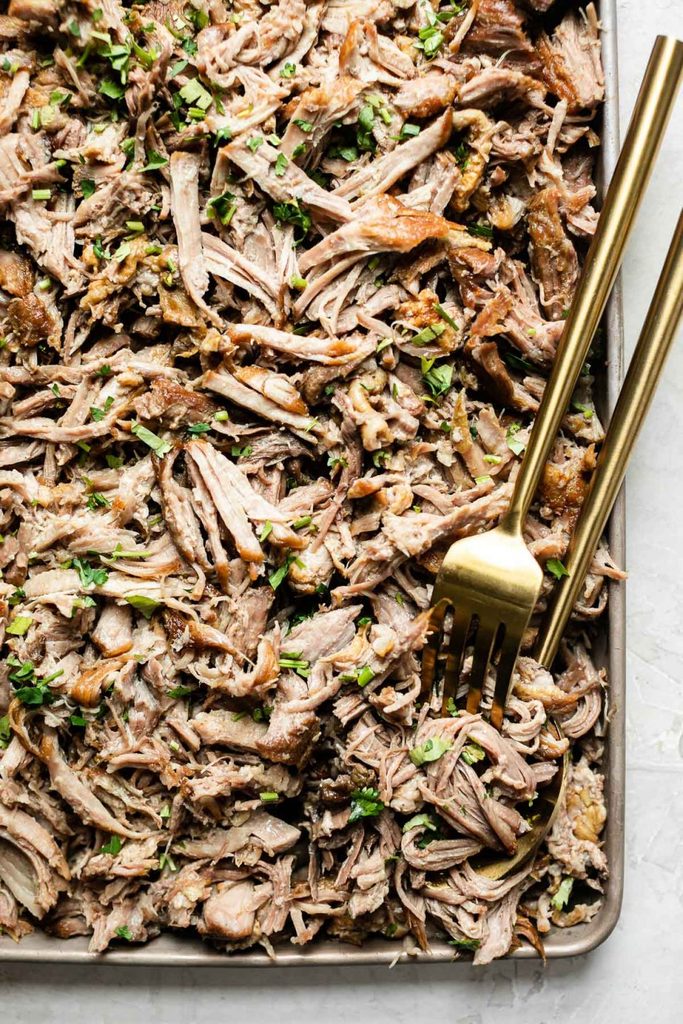
1. Kalua Pork
Kalua pork gets its smoky flavor from slow cooking, traditionally in an underground imu lined with hot stones and banana leaves. At home, a slow cooker does the job beautifully.
Ingredients:
- 4 lbs pork shoulder (butt roast)
- 1 tablespoon Hawaiian sea salt (or coarse salt)
- 2 tablespoons liquid smoke
- 1 cup water
Method:
- Pierce pork all over with a knife and rub with salt.
- Pour liquid smoke and water into a slow cooker, add pork.
- Cover and cook on low for 16 hours, or until it shreds easily with a fork.
- Shred meat and mix with the cooking liquid before serving.
Serves 8. Prep: 10 minutes. Cook: 16 hours.
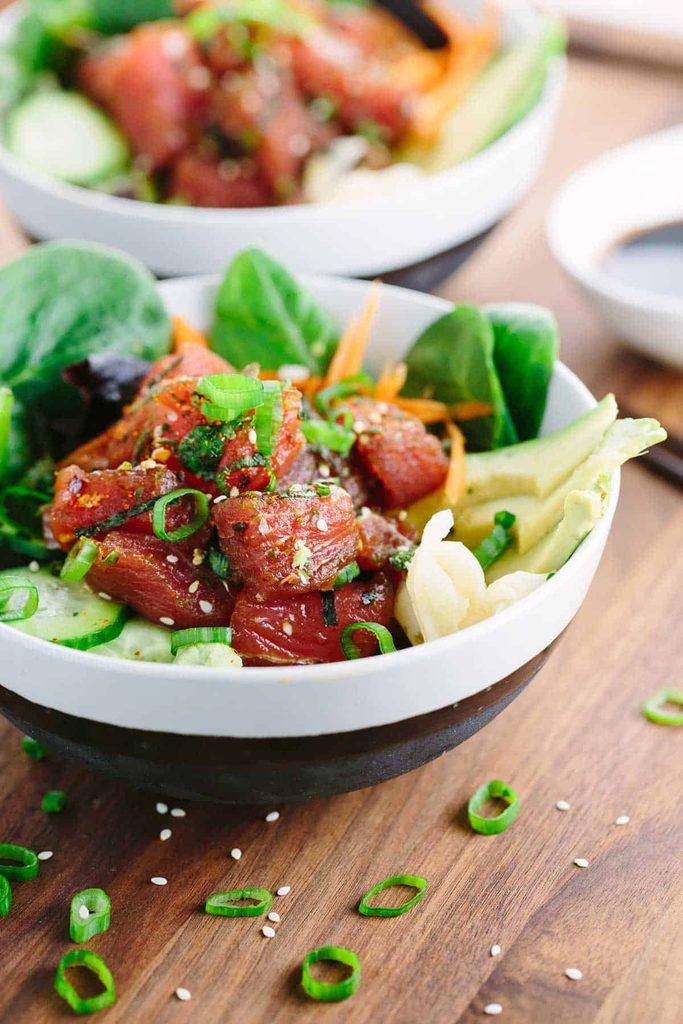
2. Ahi Poke
Ahi poke is the dish that put Hawaiian food on the map outside the islands, and the version you make at home beats most restaurant bowls once you taste how fresh sashimi-grade tuna should be.
Ingredients:
- 1 lb sashimi-grade ahi tuna, cubed
- 3 tablespoons soy sauce
- 1 tablespoon sesame oil
- 2 green onions, sliced
- 1 tablespoon sesame seeds
- 1/2 small onion, thinly sliced
- 1/2 teaspoon chili flakes (optional)
Method:
- Cube tuna into bite-sized pieces.
- Combine all ingredients in a bowl and toss gently.
- Chill 15 minutes before serving over rice.
Serves 4. Prep: 15 minutes. No cooking required. For more fish-forward ideas, check out these tuna recipes.
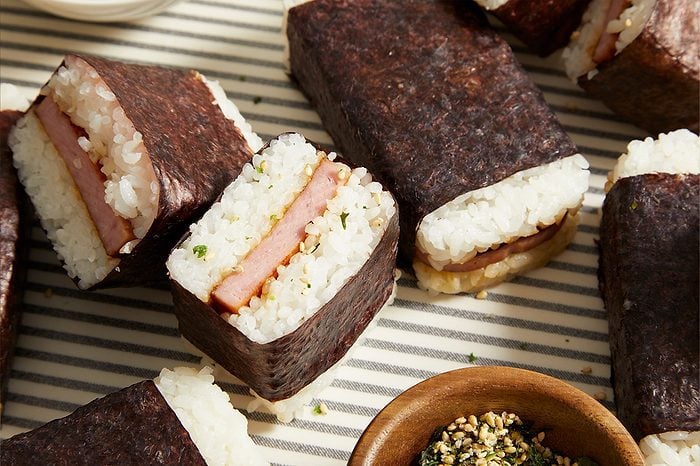
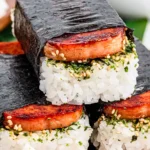
3. Spam Musubi
Spam musubi turns a can of Spam into a handheld snack that’s salty, sweet, and completely addictive once you’ve tried it warm. It’s a plate lunch counter staple across Hawaii.
Ingredients:
- 1 can Spam, sliced into 8 pieces
- 2 tablespoons soy sauce
- 2 tablespoons brown sugar
- 4 cups cooked white rice
- 4 sheets nori, cut in half lengthwise
Method:
- Fry Spam slices until browned, about 2 minutes per side.
- Add soy sauce and brown sugar to the pan, simmer 1 minute to glaze.
- Press rice into a musubi mold or rinsed Spam can, top with glazed Spam.
- Wrap with a strip of nori, pressing to seal.
Makes 8. Prep: 10 minutes. Cook: 10 minutes.
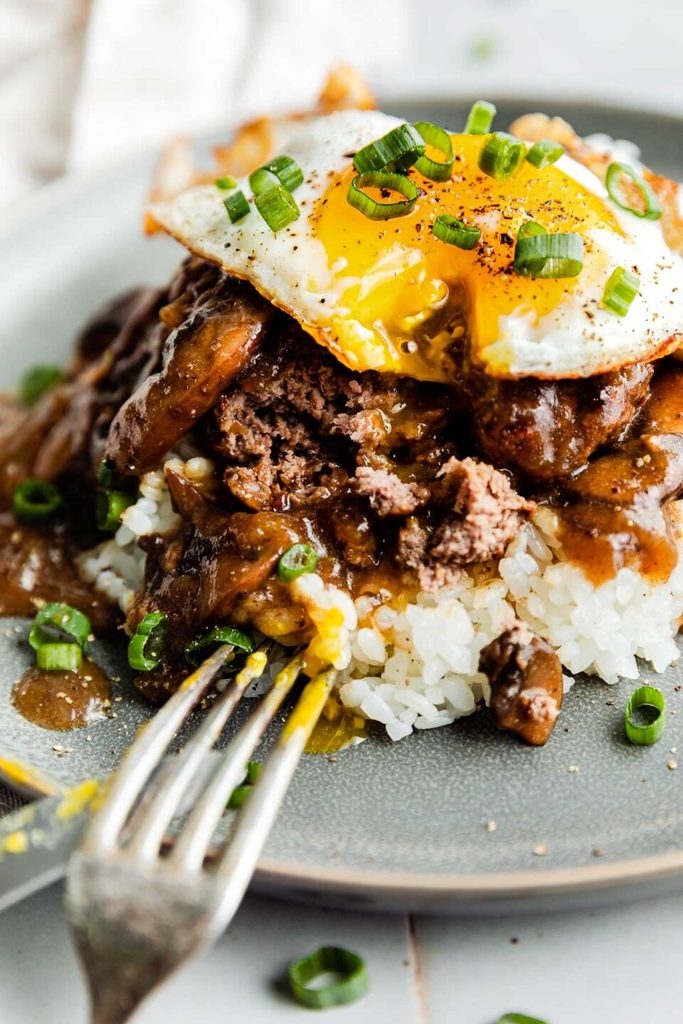
4. Loco Moco
Loco moco is comfort food at its most direct: rice, a burger patty, brown gravy, and a fried egg stacked in one bowl. It’s the kind of breakfast that doubles as dinner.
Ingredients:
- 1 lb ground beef
- Salt and pepper to taste
- 2 cups beef gravy (store-bought or homemade)
- 4 eggs
- 4 cups cooked white rice
Method:
- Form ground beef into 4 patties, season, and pan-fry 4 minutes per side.
- Fry eggs sunny-side up in a separate pan.
- Heat gravy in a saucepan.
- Layer rice, patty, gravy, and a fried egg in each bowl.
Serves 4. Prep: 10 minutes. Cook: 20 minutes.
5. Laulau
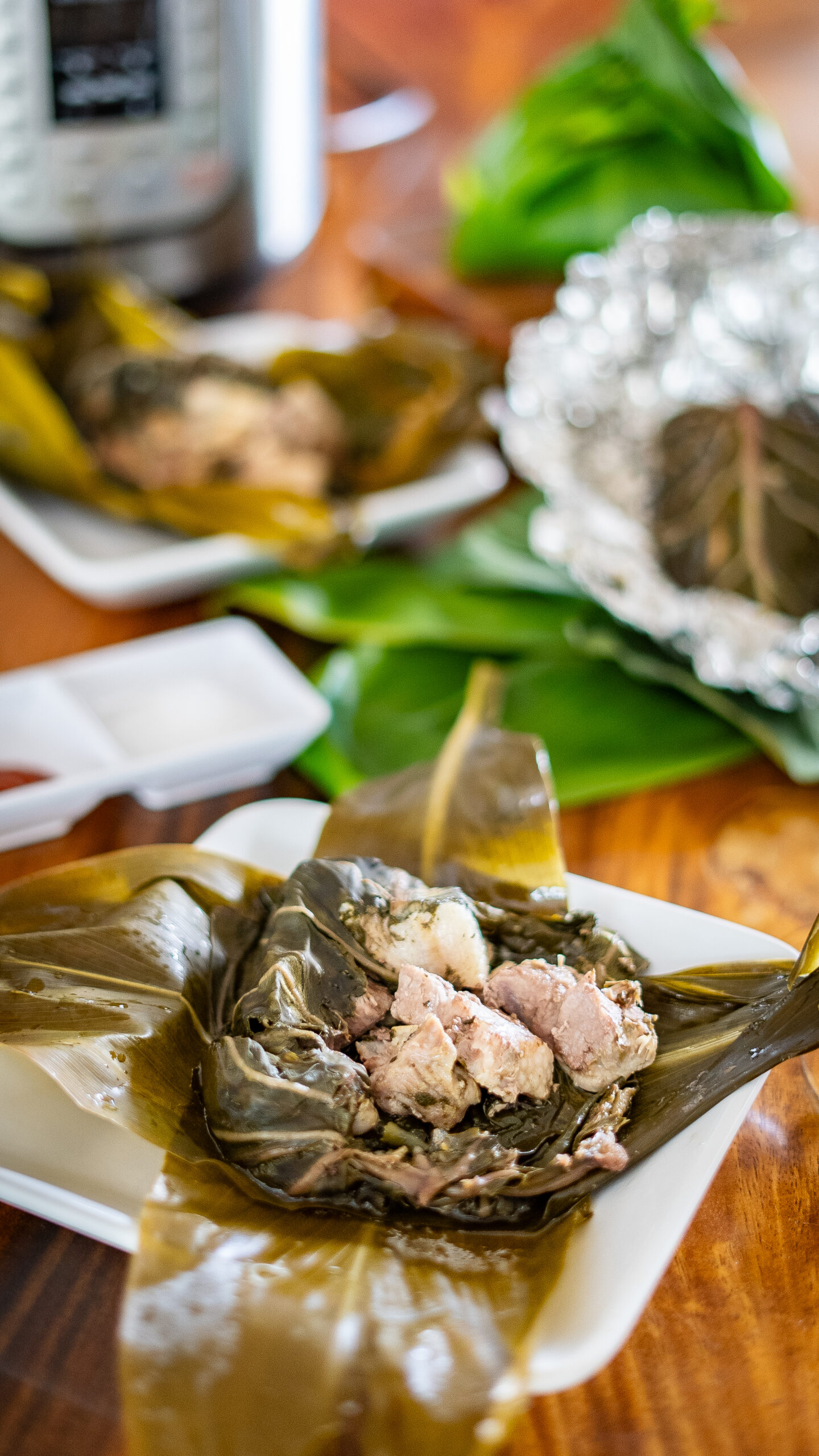
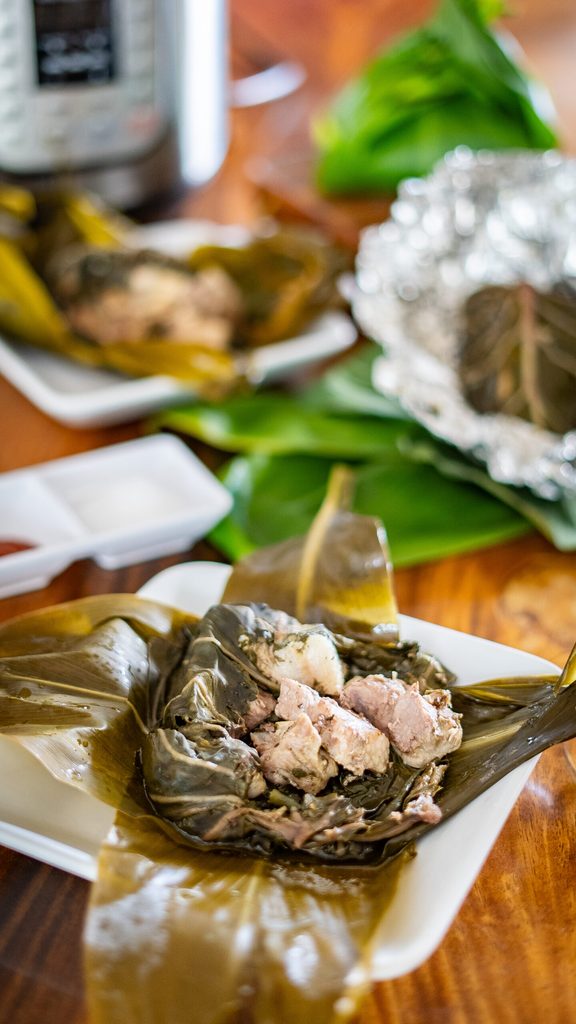
Laulau wraps seasoned pork and salted butterfish in taro leaves and ti leaves, then steams everything until tender and earthy. It takes patience, but the payoff is worth it.
Ingredients:
- 2 lbs pork shoulder, cubed
- 1/2 lb salted butterfish
- 1 tablespoon Hawaiian salt
- 16 taro (luau) leaves, stems removed
- 4 ti leaves (or substitute foil)
Method:
- Season pork and butterfish with salt.
- Layer taro leaves, add pork and fish in the center, fold into a bundle.
- Wrap bundle in ti leaves, tie with kitchen twine.
- Steam for 4 hours, checking water levels periodically.
Serves 4. Prep: 30 minutes. Cook: 4 hours.
6. Huli Huli Chicken
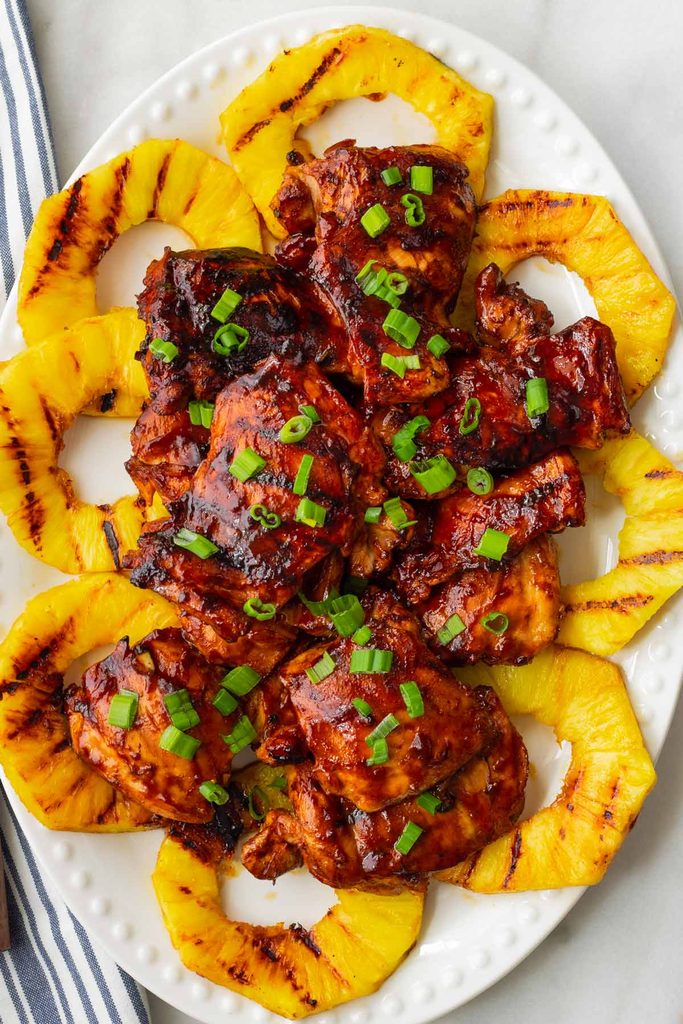
Huli huli chicken means “turn turn” chicken, named for flipping it over the grill as it cooks in a sticky-sweet soy and pineapple glaze. It’s a backyard cookout favorite.
Ingredients:
- 4 lbs chicken thighs and drumsticks
- 1/2 cup soy sauce
- 1/2 cup brown sugar
- 1/4 cup ketchup
- 1/4 cup pineapple juice
- 2 cloves garlic, minced
- 1 teaspoon grated ginger
Method:
- Whisk marinade ingredients together, reserve half for basting.
- Marinate chicken 2 hours in the fridge.
- Grill over medium heat 25 minutes, turning and basting with reserved sauce.
- Check internal temp reaches 165°F before serving.
Serves 6. Prep: 15 minutes plus marinating. Cook: 25 minutes.
7. Lomi-Lomi Salmon
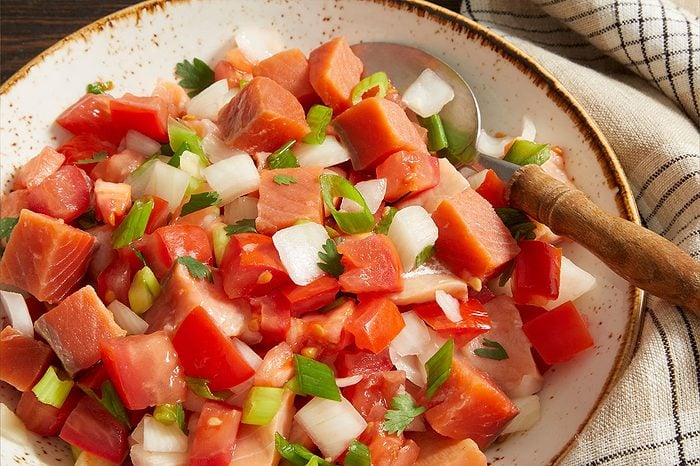
Lomi-lomi salmon is a cold, refreshing tomato and salted salmon salad, the kind of side dish that cuts through all the rich, smoky meats on a luau plate.
Ingredients:
- 1/2 lb salted salmon, diced small
- 3 large tomatoes, diced
- 1/2 sweet onion, finely diced
- 2 green onions, sliced
- Ice cubes for chilling
Method:
- Soak salted salmon in cold water 1 hour to reduce saltiness, then dice.
- Combine salmon, tomatoes, onion, and green onions in a bowl.
- Add a few ice cubes, toss, and chill 30 minutes before serving.
Serves 6. Prep: 20 minutes plus chilling. No cooking required. If you like working with salmon, these salmon dinner recipes are worth bookmarking too.
8. Poi
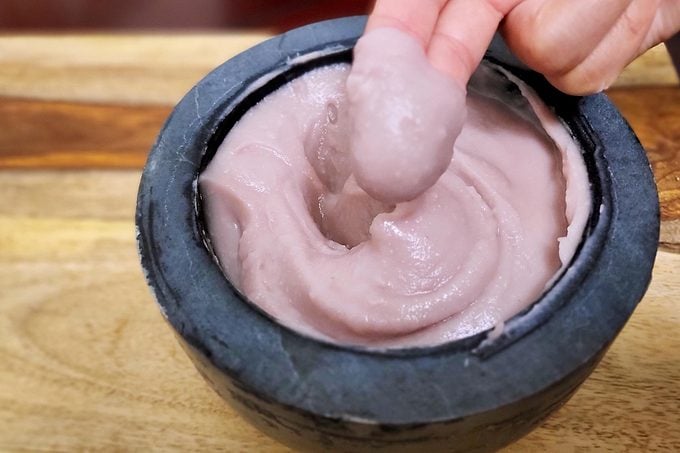
Poi is pounded taro root mixed with water until smooth, with a mild, slightly tangy flavor that mellows out the bolder, saltier dishes it’s served alongside.
Ingredients:
- 2 lbs cooked taro root, peeled
- 1 to 1 1/2 cups water
Method:
- Mash cooked taro in a large bowl or food processor.
- Add water gradually, blending until smooth and pudding-like.
- Cover and let sit at room temperature a day or two for a tangier flavor, or serve fresh.
Serves 6. Prep: 15 minutes. Cook: taro must be pre-steamed 45 minutes.
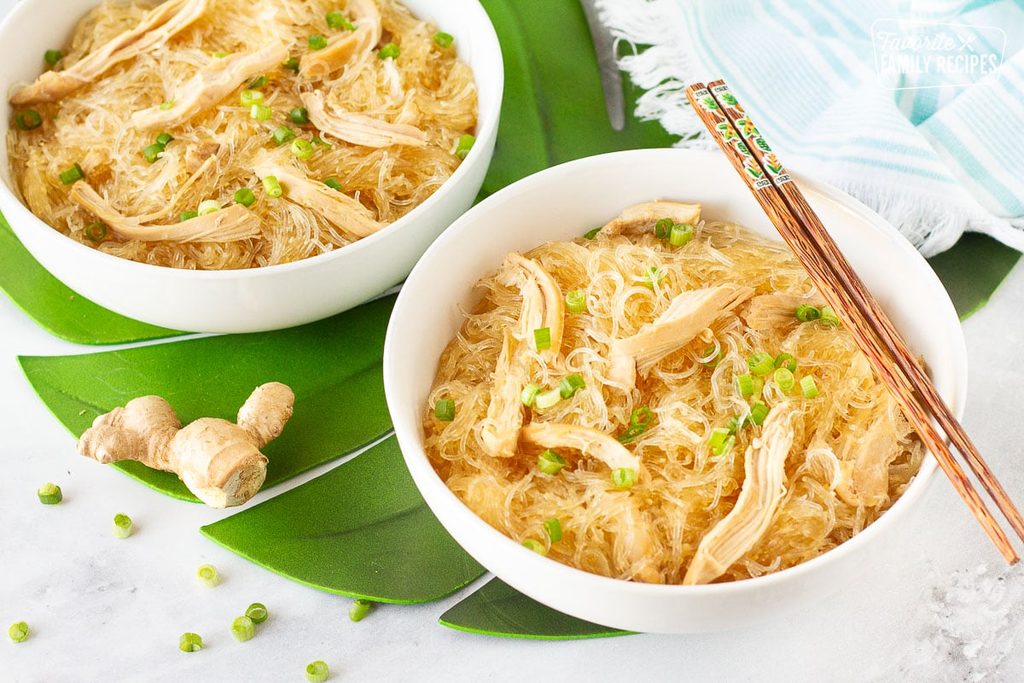
9. Chicken Long Rice
Chicken long rice is Hawaii’s answer to chicken noodle soup, made with slippery glass noodles and a simple ginger-scented broth. It’s gentle, warming food.
Ingredients:
- 1 lb chicken thighs
- 6 cups chicken broth
- 1-inch piece ginger, sliced
- 4 oz long rice (mung bean noodles), soaked
- 2 green onions, sliced
- Salt to taste
Method:
- Simmer chicken and ginger in broth 25 minutes until chicken is cooked.
- Remove chicken, shred, and return to pot.
- Add soaked noodles, simmer 5 minutes.
- Season with salt and top with green onions.
Serves 4. Prep: 10 minutes. Cook: 30 minutes.
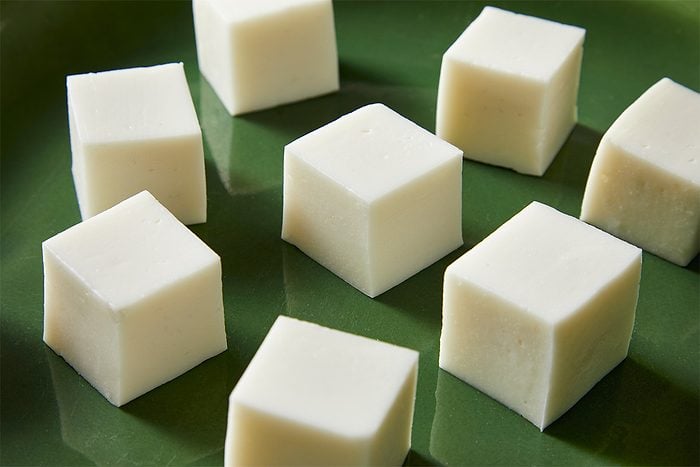
10. Haupia
Haupia is a firm coconut milk pudding, cut into squares and often served alongside cake at island celebrations. It’s simple, creamy, and not overly sweet.
Ingredients:
- 2 cups coconut milk
- 1/2 cup sugar
- 1/3 cup cornstarch
- 1/2 cup water
Method:
- Heat coconut milk and sugar in a saucepan until sugar dissolves.
- Whisk cornstarch into water, then stir into the pot.
- Cook, stirring constantly, until thickened, about 5 minutes.
- Pour into a dish and chill 2 hours before cutting into squares.
Serves 8. Prep: 10 minutes plus chilling. Cook: 10 minutes.
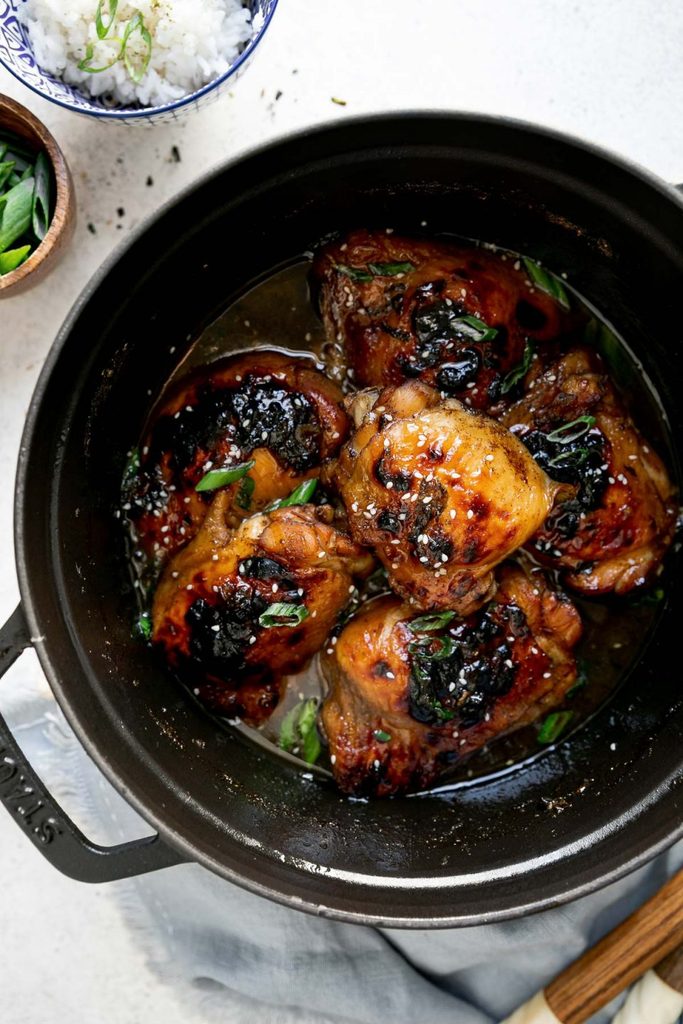
11. Shoyu Chicken
Shoyu chicken simmers in a soy-based sauce until glossy and deeply savory, a dish with clear Japanese plantation roots that’s now a weeknight staple across the islands.
Ingredients:
- 3 lbs chicken thighs, bone-in
- 1 cup soy sauce
- 1 cup water
- 1/2 cup brown sugar
- 3 cloves garlic, smashed
- 1-inch piece ginger, sliced
Method:
- Combine soy sauce, water, sugar, garlic, and ginger in a pot.
- Add chicken, bring to a simmer.
- Cook uncovered 35 minutes, turning occasionally, until sauce thickens and chicken is tender.
Serves 6. Prep: 10 minutes. Cook: 35 minutes. For more ways to use chicken thighs, browse these chicken recipes.
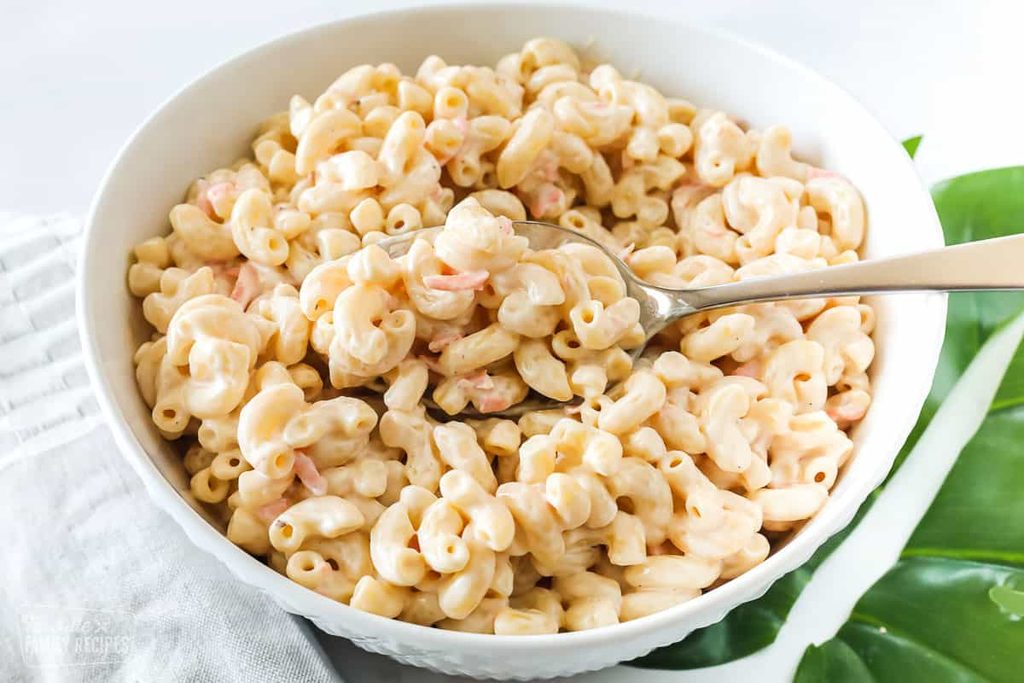
12. Hawaiian Macaroni Salad
Hawaiian macaroni salad is creamy, slightly tangy, and deliberately overcooked on the noodles so it soaks up extra dressing. It’s the quiet workhorse of every plate lunch.
Ingredients:
- 2 cups elbow macaroni
- 1 cup mayonnaise
- 2 tablespoons apple cider vinegar
- 1/4 cup grated carrot
- 1/4 cup finely diced onion
- Salt and pepper to taste
Method:
- Cook macaroni 2 minutes past package directions, drain, and cool slightly.
- Mix mayonnaise and vinegar, toss with warm macaroni so it absorbs the dressing.
- Stir in carrot and onion, season with salt and pepper.
- Chill at least 1 hour before serving.
Serves 6. Prep: 10 minutes plus chilling. Cook: 10 minutes.
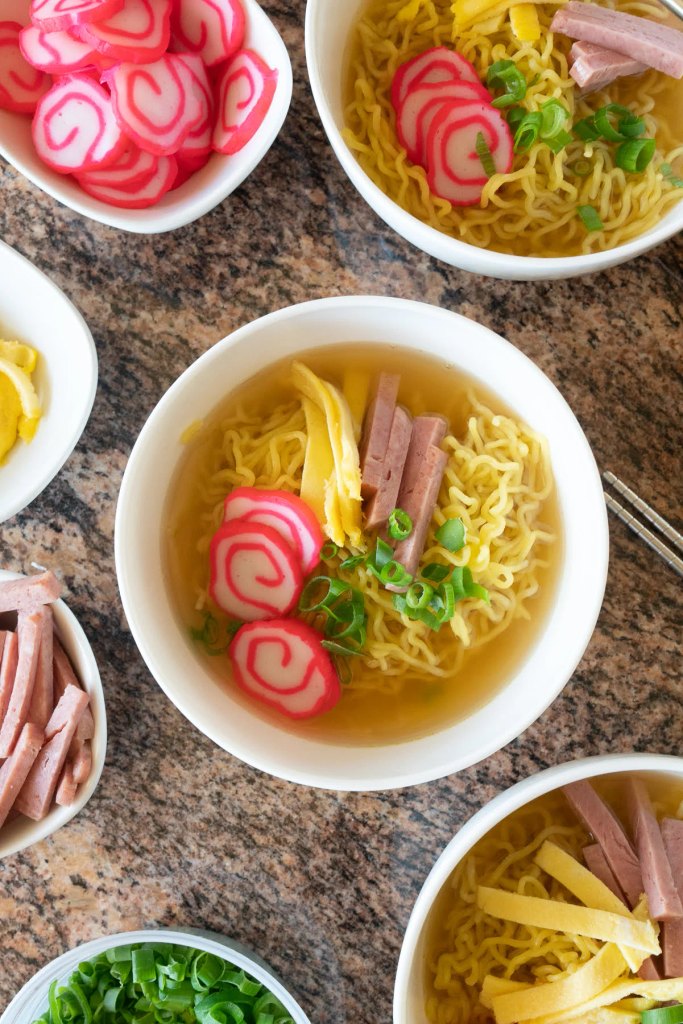
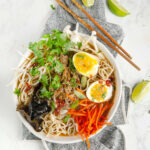
13. Saimin
Saimin is Hawaii’s own noodle soup, blending Japanese, Chinese, and Filipino influences into one bowl of springy noodles and light broth. It’s the ultimate late-night plate lunch alternative.
Ingredients:
- 4 cups chicken broth
- 2 cups dashi or additional chicken broth
- 1 tablespoon soy sauce
- 8 oz fresh saimin or ramen noodles
- 2 green onions, sliced
- 2 slices Spam or char siu, sliced
- 1 egg, boiled and halved
Method:
- Combine broth, dashi, and soy sauce in a pot, bring to a simmer.
- Cook noodles separately according to package directions, drain.
- Divide noodles into bowls, ladle hot broth over top.
- Garnish with green onions, Spam, and boiled egg.
Serves 2. Prep: 10 minutes. Cook: 15 minutes.
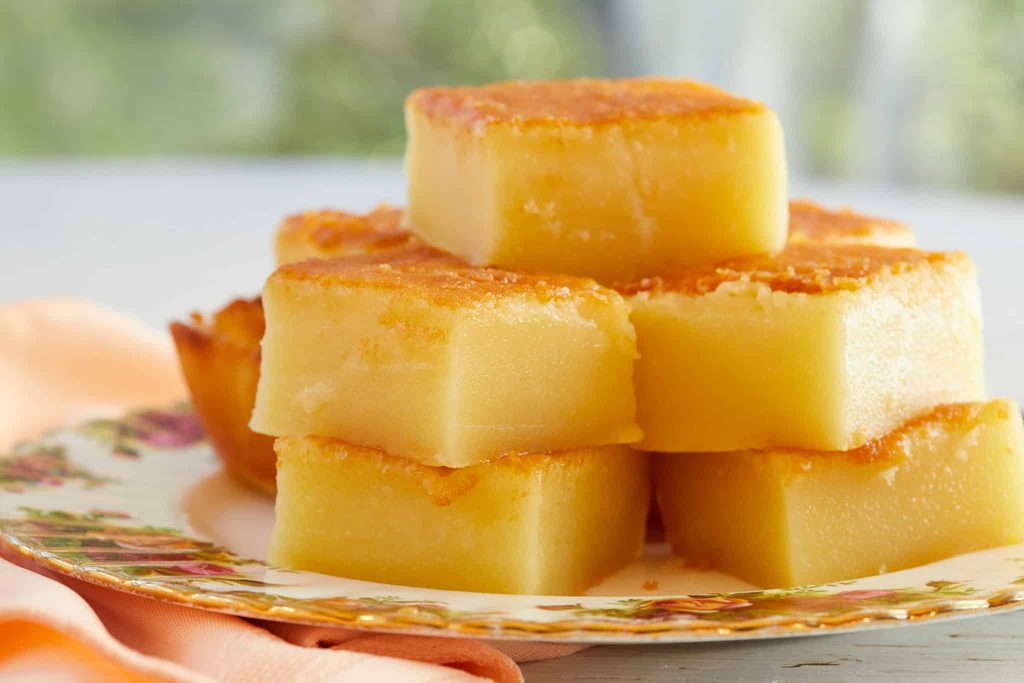
14. Butter Mochi
Butter mochi is a chewy, dense coconut cake made with glutinous rice flour, a texture that’s completely different from regular cake and completely worth getting used to.
Ingredients:
- 1 box (16 oz) mochiko (glutinous rice flour)
- 2 cups sugar
- 1 teaspoon baking powder
- 4 eggs
- 1 can (13.5 oz) coconut milk
- 1 cup milk
- 1/2 cup melted butter
- 1 teaspoon vanilla extract
Method:
- Preheat oven to 350°F and grease a 9×13 baking dish.
- Whisk mochiko, sugar, and baking powder together.
- Add eggs, coconut milk, milk, butter, and vanilla, mix until smooth.
- Pour into the dish and bake 1 hour until golden and set.
Serves 12. Prep: 10 minutes. Cook: 1 hour.
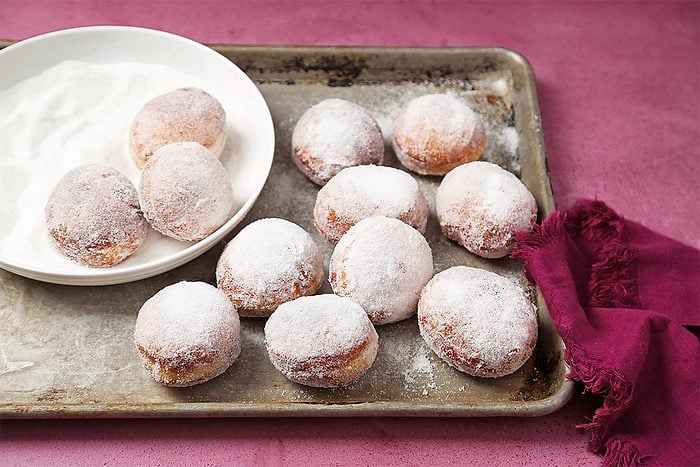
15. Malasadas
Malasadas are Portuguese-style fried doughnuts without the hole, rolled in sugar while still warm so every bite stays soft in the center and crisp on the edge.
Ingredients:
- 4 cups flour
- 1/2 cup sugar, plus more for coating
- 2 1/4 teaspoons active dry yeast
- 4 eggs
- 1/2 cup melted butter
- 1 cup warm milk
- Oil for frying
Method:
- Mix yeast with warm milk, let sit 5 minutes.
- Combine flour, sugar, eggs, and butter, then add the yeast mixture, knead into a soft dough.
- Let rise 1 hour until doubled.
- Pinch off pieces, fry in 350°F oil 2 minutes per side, roll in sugar while warm.
Makes 20. Prep: 1 hour 15 minutes. Cook: 20 minutes.
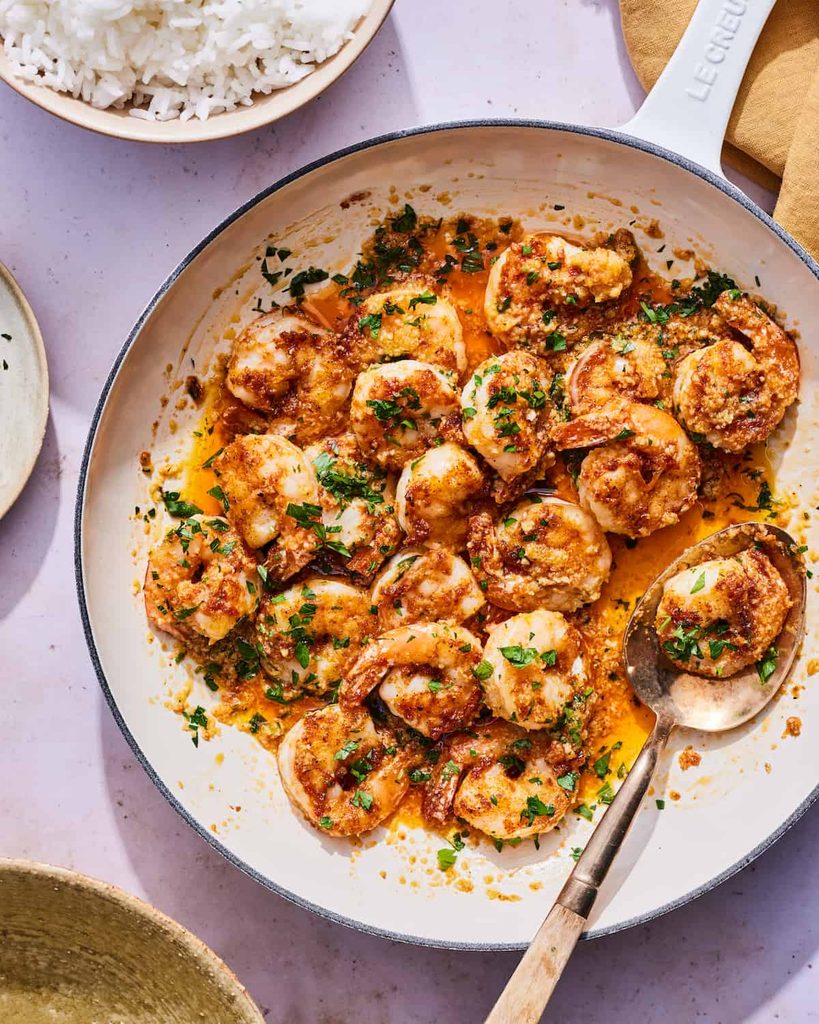
16. Hawaiian Garlic Shrimp
Hawaiian garlic shrimp, inspired by the famous food trucks on Oahu’s North Shore, gets its punch from a heavy hand with butter and fresh garlic.
Ingredients:
- 1 lb large shrimp, shell-on
- 6 tablespoons butter
- 8 cloves garlic, minced
- 1/2 cup flour (for dredging)
- Juice of 1 lemon
- Salt to taste
Method:
- Dredge shrimp lightly in flour.
- Melt butter in a pan, add garlic, cook 1 minute until fragrant.
- Add shrimp, cook 2 minutes per side until pink.
- Finish with lemon juice and salt, serve over rice.
Serves 4. Prep: 10 minutes. Cook: 8 minutes.
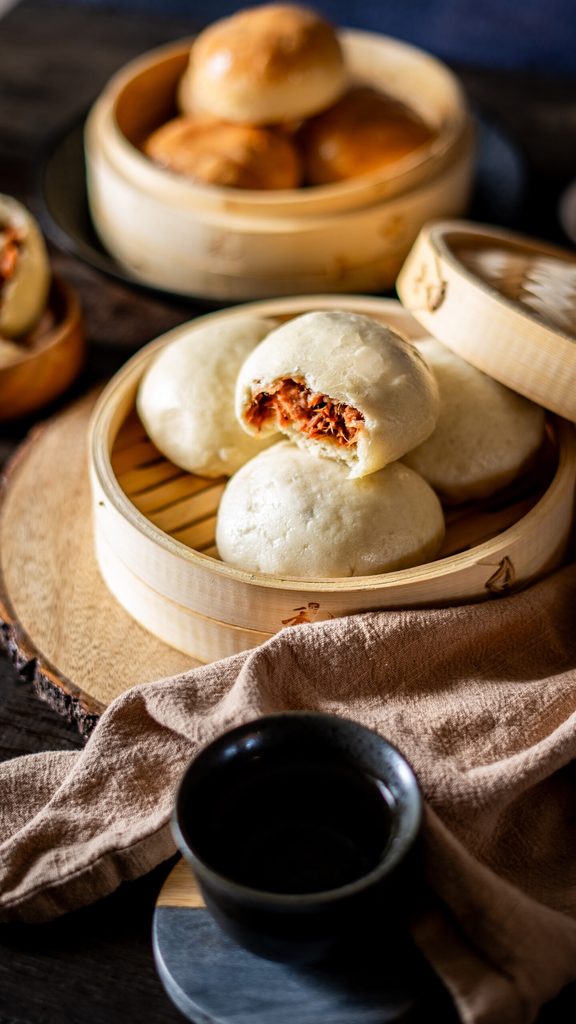
17. Manapua
Manapua is a soft steamed bun filled with sweet char siu pork, adapted from Chinese char siu bao into a handheld island favorite you’ll find in every local bakery.
Ingredients:
- 1 lb prepared char siu pork, diced
- 2 tablespoons hoisin sauce
- 1 tablespoon soy sauce
- 1 package (16 count) frozen bao dough, thawed
Method:
- Mix char siu with hoisin and soy sauce.
- Flatten each piece of dough, add 2 tablespoons filling, pinch closed.
- Place on parchment squares, let rest 15 minutes.
- Steam 12 minutes until puffed and set.
Makes 16. Prep: 25 minutes. Cook: 12 minutes.
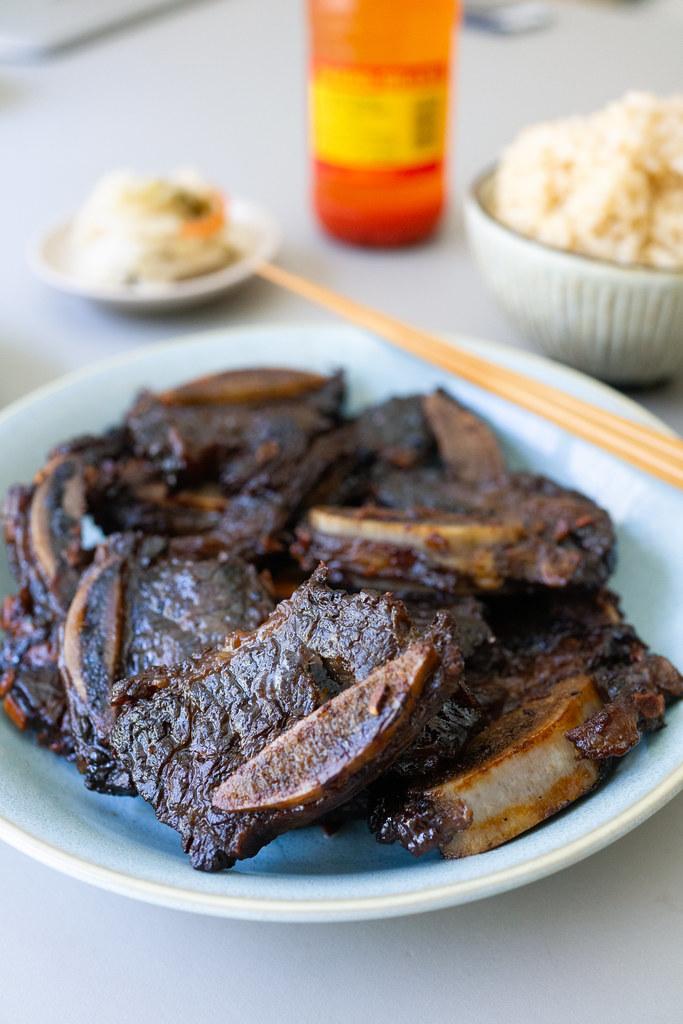
18. Pipikaula
Pipikaula is Hawaiian-style dried beef, salted and sometimes smoked, then pan-fried until crisp at the edges. Think of it as island beef jerky you cook fresh.
Ingredients:
- 2 lbs flank steak, cut into strips
- 1/4 cup soy sauce
- 2 tablespoons brown sugar
- 2 cloves garlic, minced
- 1 teaspoon Hawaiian salt
- Oil for frying
Method:
- Marinate beef strips in soy sauce, sugar, garlic, and salt for 24 hours.
- Dry strips with paper towels.
- Pan-fry in a little oil over medium-high heat, 3 minutes per side, until crisp.
Serves 6. Prep: 10 minutes plus 24 hours marinating. Cook: 10 minutes.
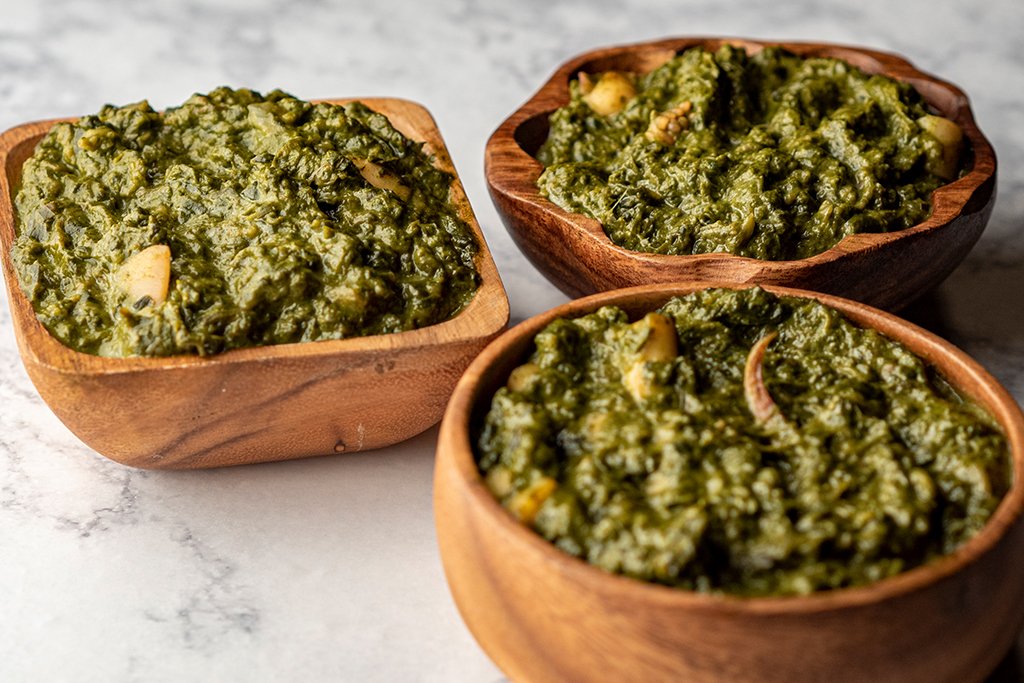
19. Squid Luau
Squid luau simmers tender squid with taro leaves and coconut milk into a dish that’s rich, slightly briny, and deeply traditional at any real luau spread.
Ingredients:
- 1 lb squid, cleaned and sliced into rings
- 4 cups taro (luau) leaves, chopped
- 1 can (13.5 oz) coconut milk
- 1 small onion, diced
- 1 teaspoon Hawaiian salt
Method:
- Boil taro leaves 45 minutes until fully tender (raw leaves can irritate the throat if undercooked).
- Add squid, coconut milk, onion, and salt.
- Simmer 15 minutes until squid is tender and sauce has thickened slightly.
Serves 4. Prep: 15 minutes. Cook: 1 hour.
Traditional Hawaiian Food vs. Hawaii Local Food
Traditional Hawaiian food refers to dishes rooted in Native Hawaiian culture, built around poi, kalua pork, laulau, and poke, often tied to the land and sea through methods like the imu pit and raw fish preparation. These dishes predate Western contact and carry cultural and spiritual weight.
Hawaii local food describes the broader plate-lunch culture that grew out of the plantation era, when Japanese, Chinese, Filipino, Portuguese, and Korean workers shared meals together. Spam musubi, saimin, loco moco, and macaroni salad all come from this melting pot.
Both categories sit on the same table at most family gatherings. A proper luau spread might include kalua pork (traditional) next to macaroni salad and chicken long rice (local), and nobody at the party makes a distinction while eating. Knowing the difference helps you understand why Hawaiian food tastes nothing like a single cuisine. It’s a layered history on one plate, and that layering is exactly what makes it worth cooking at home. For a broader spread of island-style dishes beyond this list, 27 Hawaiian recipes rounds up even more options.
Ingredient Swaps for Mainland Kitchens
Taro leaves and fresh poi can be hard to find outside Hawaii, so a few smart swaps keep these recipes within reach. Frozen luau leaves, sold at Asian grocery stores, work fine for laulau and squid luau once thawed and drained.
Salted butterfish is often sold online or at specialty Asian markets; if you can’t find it, a well-salted piece of cod makes a reasonable stand-in for laulau. Hawaiian sea salt can be swapped for any coarse sea salt without changing the flavor much.
Fresh ti leaves are tough to source on the mainland. Banana leaves or even parchment and foil work as wrappers for laulau, though you’ll lose a bit of the earthy aroma ti leaves bring. For poke, any sashimi-grade tuna from a trusted fish counter will do the job, and the tuna recipes collection has more ideas for using extra fish.
Mochiko flour and bao dough are both sold at most well-stocked grocery stores now, so butter mochi and manapua rarely need substitutions. If local bakeries near you sell malasadas or mochi donuts, that’s worth exploring too, and these mochi donut recipes offer a fun side project for the same rice-flour pantry staples.
Food Safety for Raw Fish and Taro Leaves
Raw fish dishes like ahi poke require sashimi-grade tuna, which means it’s been handled and frozen according to FDA guidelines to kill parasites. Buy it from a fish counter that specifically labels it sashimi-grade or sushi-grade, and use it the same day.
Keep poke chilled until serving, and don’t let it sit at room temperature longer than 30 minutes. Bacteria grow fast on raw seafood left out, especially in a warm kitchen or at an outdoor party.
Taro leaves contain calcium oxalate crystals, which irritate the throat and mouth if the leaves aren’t cooked long enough. Always boil or steam taro leaves at least 45 minutes before eating them in laulau or squid luau. Undercooked leaves cause a sharp, itchy sensation that fully cooked leaves never produce.
Pregnant women and people with compromised immune systems should avoid raw fish dishes like poke and lomi-lomi salmon made with raw-style salted fish. When in doubt, cook the fish through instead, or pick a dish like shoyu chicken or huli huli chicken that’s fully cooked and just as satisfying.